Best Nano-Hydroxyapatite Toothpaste: Five Tubes Ranked After 450 Days
- How I chose nHA toothpaste
- Last updated
- Top nHA toothpaste: Boka


As an Amazon Associate, I earn from qualifying purchases. Links to Amazon may earn a commission at no extra cost to you.
Boka is the best nano-hydroxyapatite toothpaste of the five I ranked. I scored each paste on the flavor I would brush with daily, the nHA percent stated on the label, and how far it eased the sting on sensitive teeth.
-
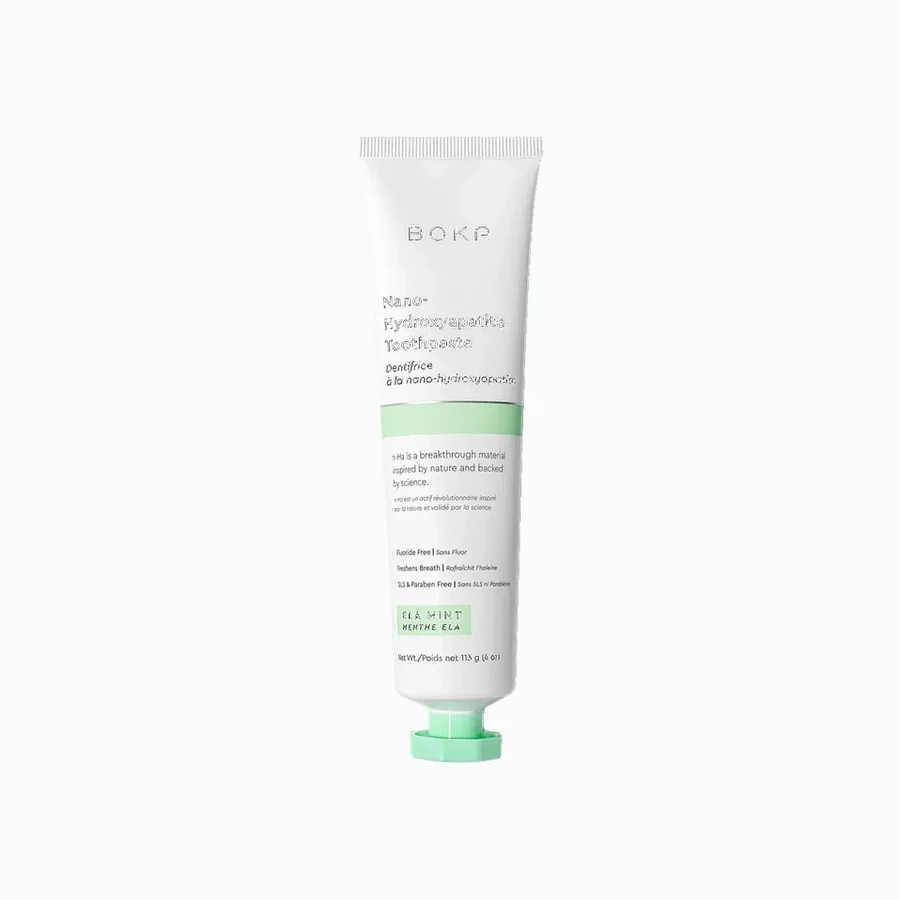 Boka
Flavor range and everyday mint
Ela Mint and the rest of the Boka flavor range keep a daily brush going. The Boka label leaves the nHA percent off.
-
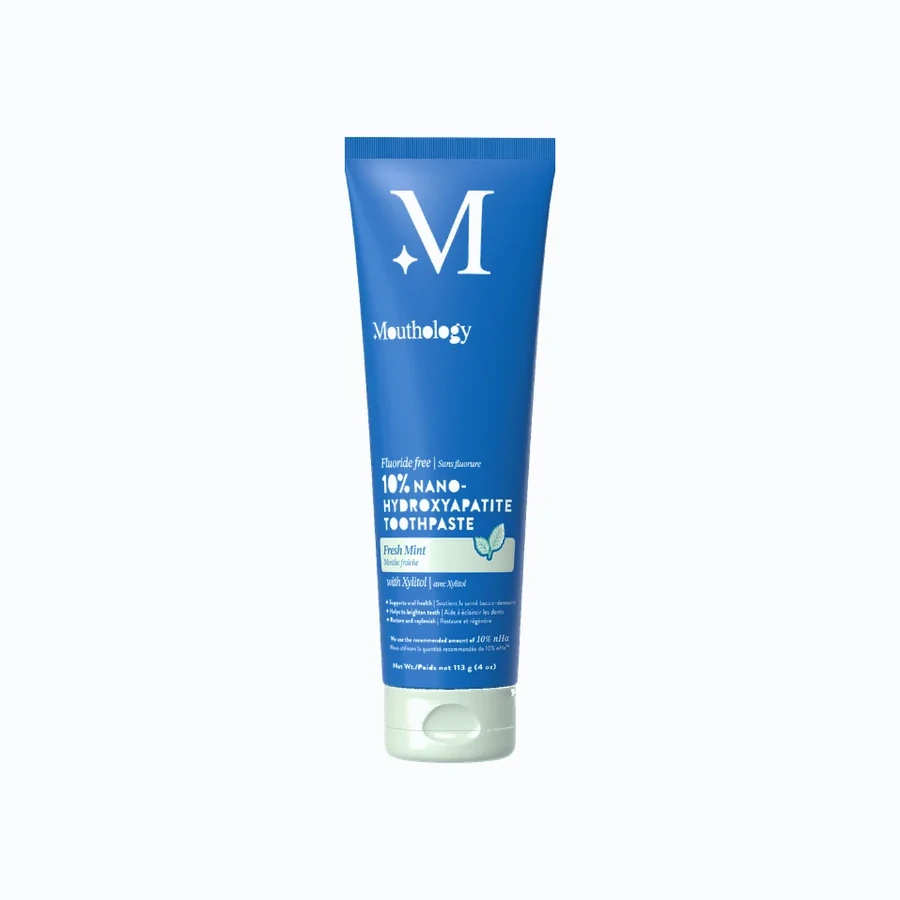 Mouthology
10% nHA on the label
The adult Fresh Mint label states 10% nHA. Davids leaves the percent off the label.
-
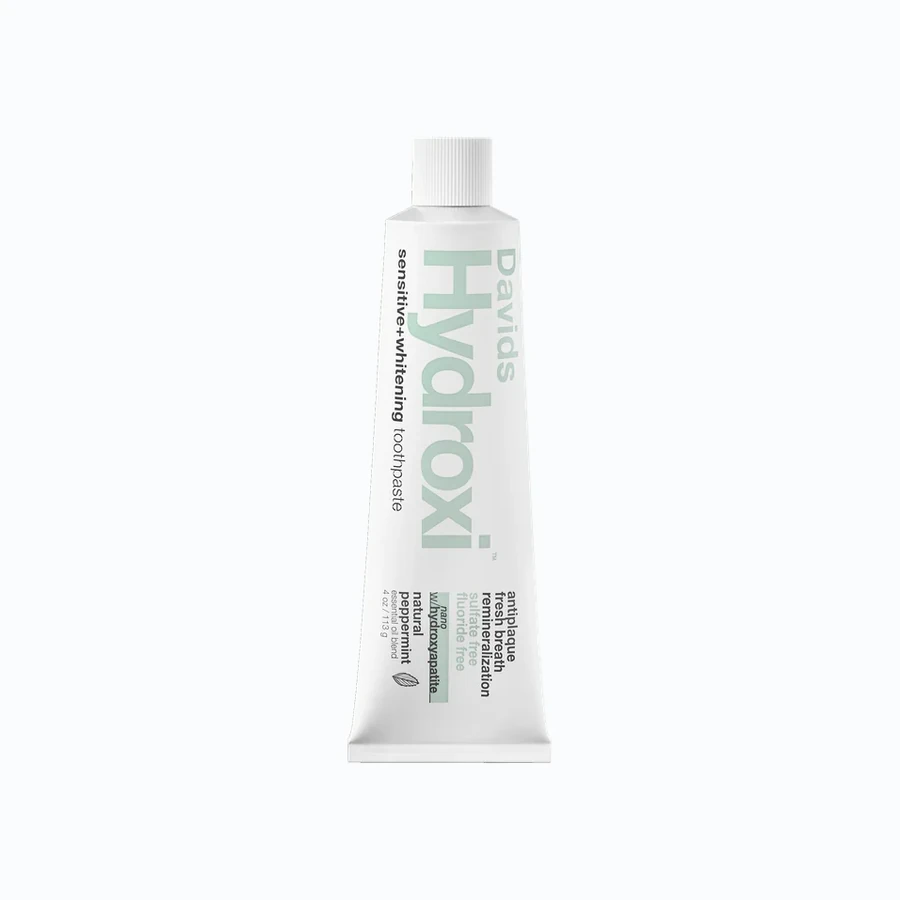 Davids Hydroxi
Sensitivity and rod-shaped nHA
Buyers report an eased sting, and Davids Hydroxi carries rod-shaped nHA.
I brushed with five nano-hydroxyapatite toothpastes across 450 days, and I bought the five myself on US Amazon. I ranked Boka, Mouthology, Davids Hydroxi, Himalaya Whitening+, and RiseWell. Nano-hydroxyapatite toothpaste is a fluoride-free paste built on hydroxyapatite, the mineral enamel is made of. The paste leaves that mineral on thin enamel and plugs the open pores in dentin that cause dentin hypersensitivity, the sting from hot and cold.
The nHA percent stated on the label, the flavor, and the foam separated the five toothpastes. I read the percent on the label before I paid, and I checked the flavor and the foam after buying. Most buyers say Davids Hydroxi suits a mouth that stings on cold. Mouthology and Himalaya Whitening+ Extra Strength state 10% nHA on the label. RiseWell suits a child who swallows paste.
I gave each of the five nano-hydroxyapatite toothpastes 90 days. The five runs came to 450 days, and the question was whether nano-hydroxyapatite toothpaste beat fluoride on my own teeth. For new cavities, it did not help. If you have ongoing decay, use fluoride, since dentists recommend that.
I rented a macro lens and photographed my own front teeth close up every day for 90 days, once before food and once after. Boka was the brand I felt helped me most. The other four stayed undecided.
I may have to run another test to settle the other four. Eating an apple, ice cream, or cocoa hurts my cavities less than it used to.
Nano-hydroxyapatite toothpaste suits sensitive teeth, a shopper who wants a stated 10% nHA dose, and a fluoride-free routine. It is the wrong buy for high cavity risk, bleach-level whitening, pets, and skin.
-

Who nHA toothpaste suits Nano-hydroxyapatite toothpaste suits daily fluoride-free brushing when the goal is:
- Less sting on sensitive teeth from hot and cold drinks
- 10% nHA stated on the label
- A paste made for kids who may swallow some while brushing, such as RiseWell
-
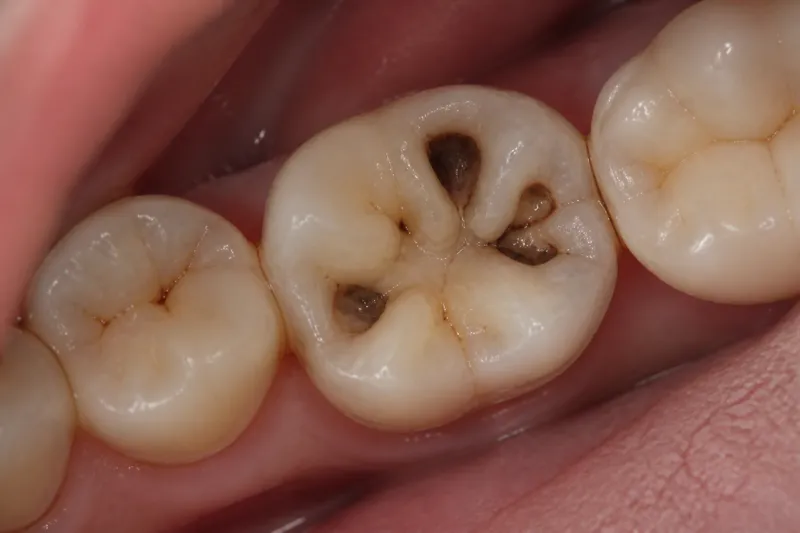
Where nHA toothpaste is the wrong buy Nano-hydroxyapatite toothpaste is the wrong buy for:
- High cavity risk without a dentist plan, where ADA-fluoride toothpaste is the first buy
- Bleach-level whitening
- Pets
- Leave-on skin use
- Rebuild-enamel and cavity-reversal claims
-
Why people switch from fluoride to nHA People move from a fluoride paste to nano-hydroxyapatite toothpaste for three reasons:
- Taste, or teeth that sting from hot and cold drinks
- Micro-HAP kids toothpaste for a child who swallows paste
- 10% nHA stated on the label, as on Mouthology or Himalaya Whitening+ Extra Strength
-
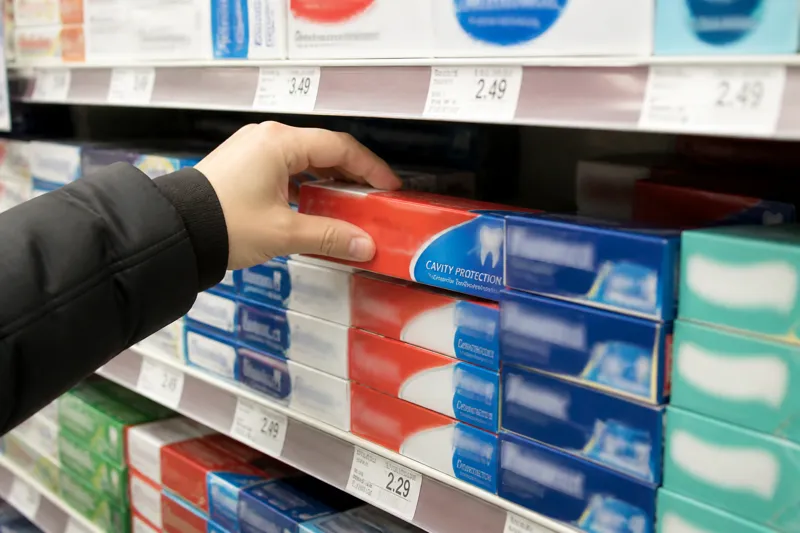
When a fluoride toothpaste fits better Three signs point to a fluoride toothpaste instead:
- ADA Seal fluoride toothpaste is the pick when cavity fighting is the goal
- Drugstore foam and a strong mint are must-haves that rule nHA out
- nHA percent or nano or micro wording is missing from the label
Of the five toothpastes I used, Boka has the flavor-range I find myself using most often for regular brushing. Mouthology and Himalaya Whitening+ Extra Strength are the only two to show 10% nano-hydroxyapatite on the label. Davids Hydroxi is the sensitivity toothpaste, for which I had high hopes but it did not seem to bring any difference for the 3 months I used it. RiseWell is made for kids who may swallow some paste while brushing, and it carries micro-hydroxyapatite rather than a nano percent.
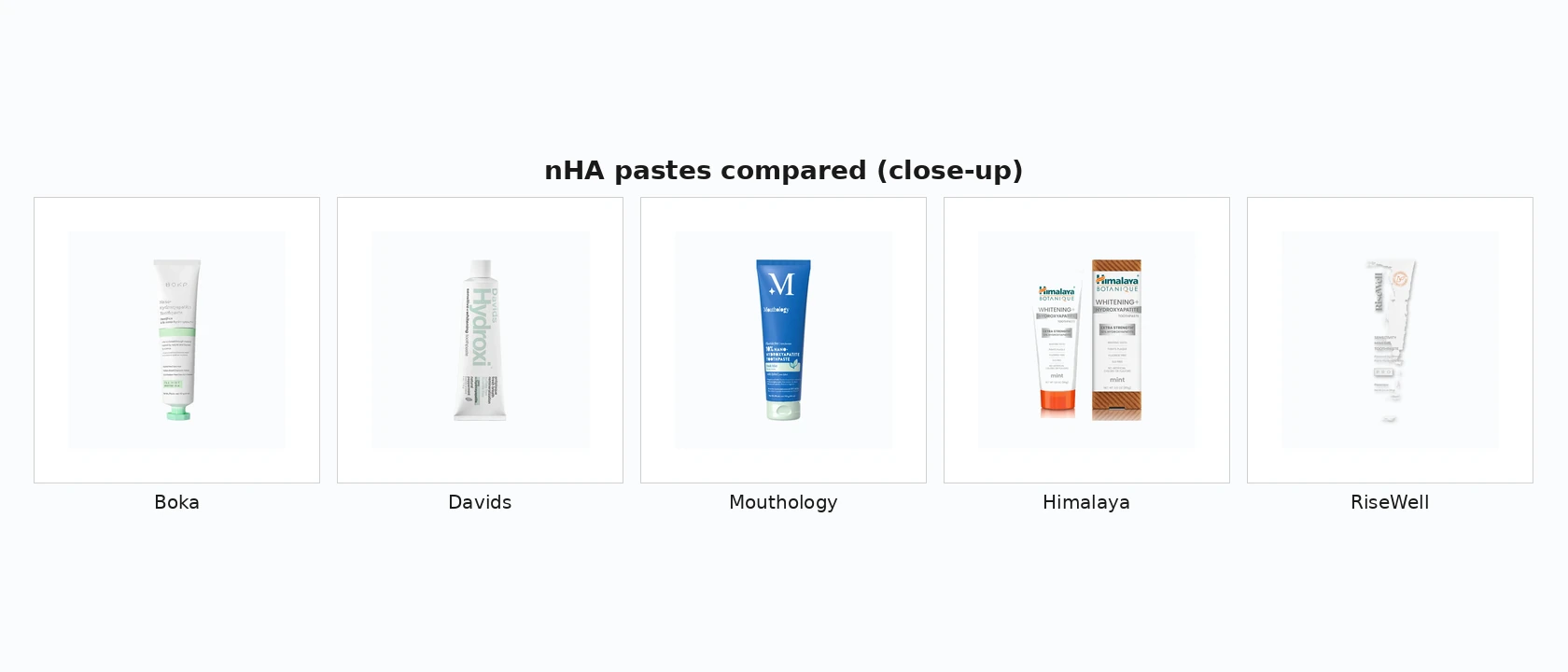
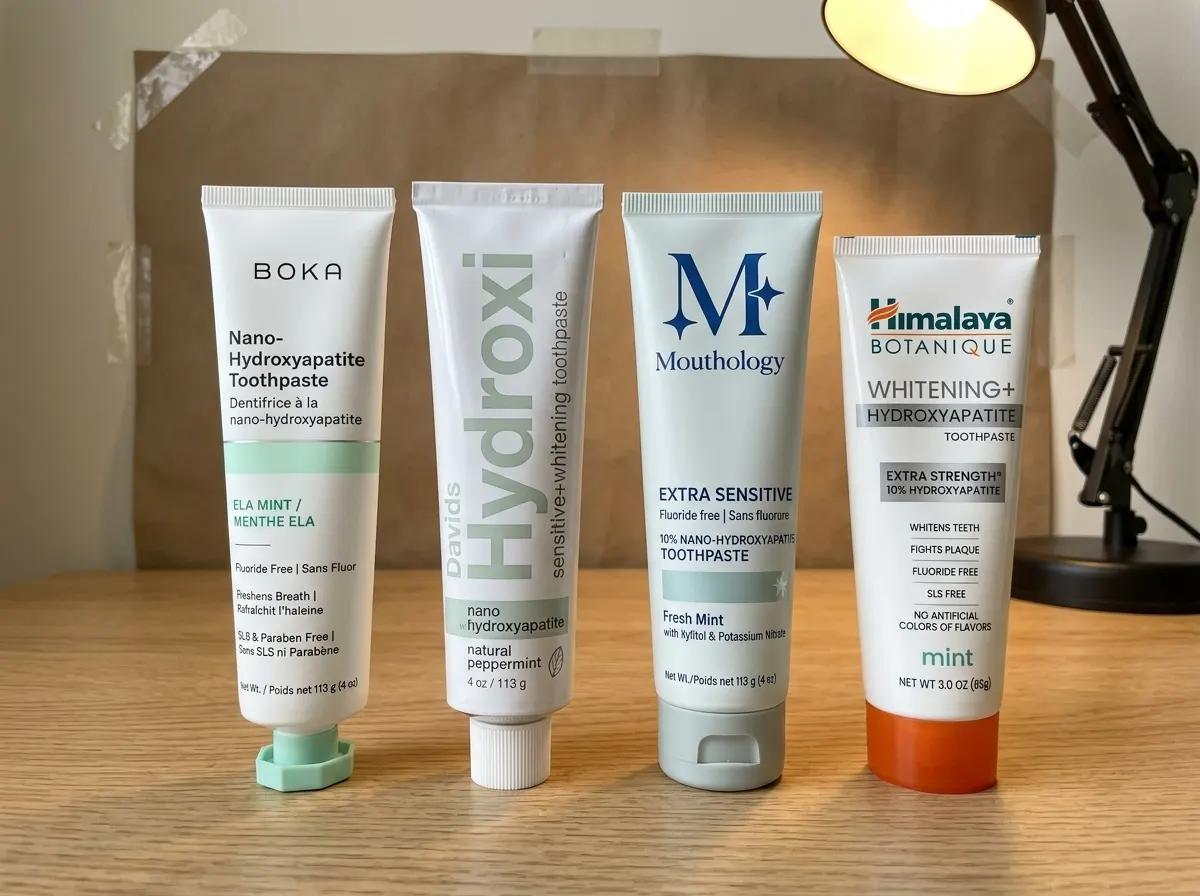
The five packs are Boka, Davids Hydroxi, Mouthology, Himalaya Whitening+, and RiseWell.
-
Boka, the flavor-range paste I brushed with daily -
Davids Hydroxi, the cheapest of the five per gram -
Mouthology, one of the two that state the percent -
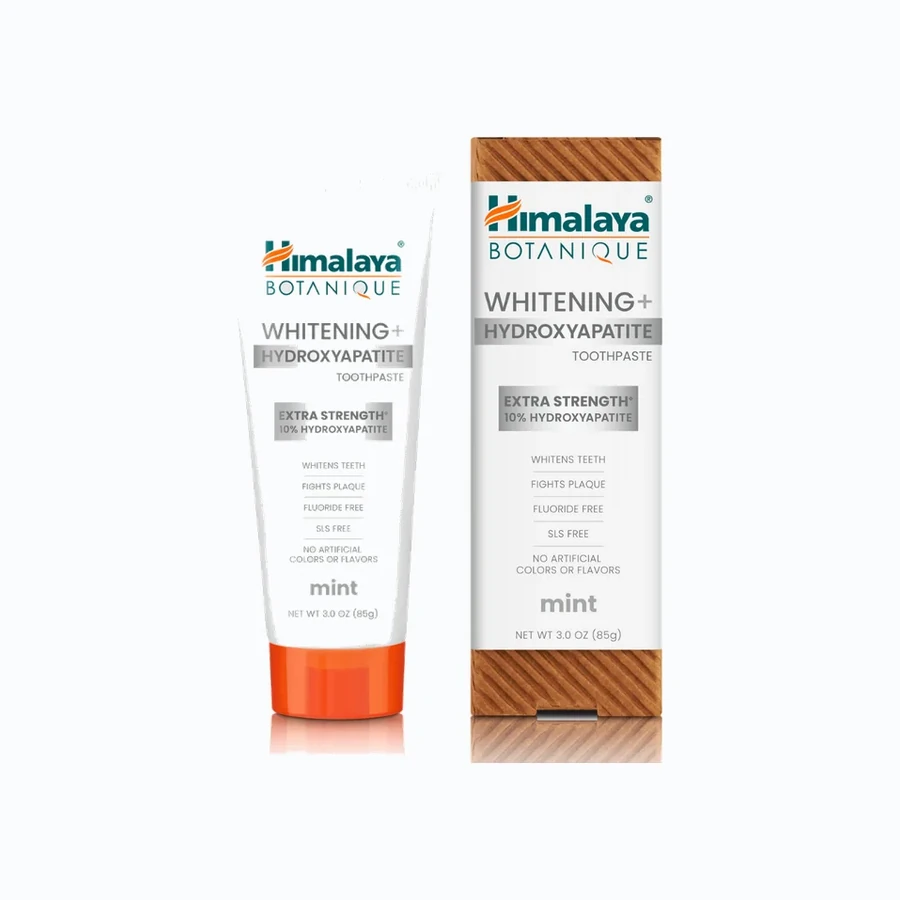
Himalaya Whitening+, the herbal mint I left for last -
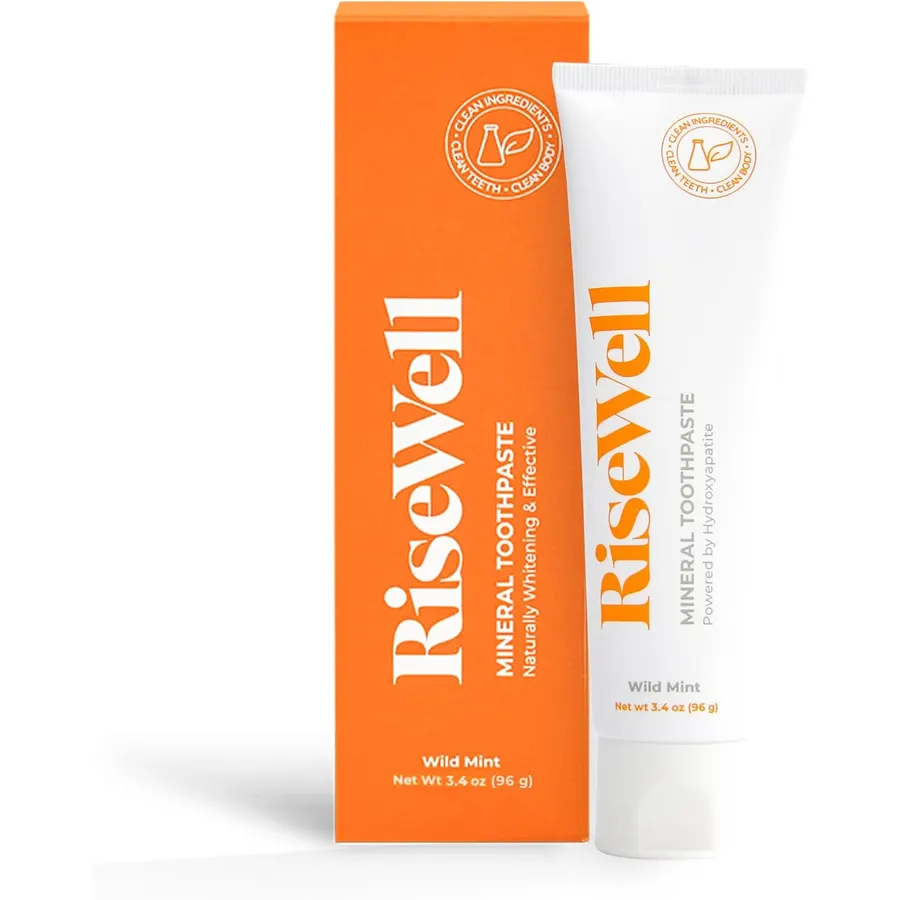
RiseWell, the micro-HAP toothpaste for a child who swallows paste
Not medical advice. Ask a dentist before you change a toothpaste for a sensitive tooth or a cavity.
How I chose the best nHA toothpastes
I looked at three things before I bought any of these five pastes. What nHA percent is on the label. Whether the label says nano or micro. And how the paste tastes and foams when I brush with it. The first two you can read straight off the pack. Mouthology and Himalaya Whitening+ Extra Strength say 10% nHA on theirs, while Boka and Davids Hydroxi leave that number off. The three checks tell you which paste fits fluoride-free brushing. I judged the sting from hot or cold drinks over my 90 days of brushing with each paste. For new cavities, most dentists still say to use fluoride.
- Pick a paste that shows the nHA percent on the label, close to 10% when it does.
- Decide between fluoride-free nHA and fluoride-plus-nHA, and make sure the pack says which one it is.
- Look for a label that mentions less sting from hot or cold drinks, or help for enamel.
- Count an SLS-free paste with a short ingredient list as a good sign.
- Buy a regular paste you brush with every day, not a specialty lab paste.
- Look at the pack for rod-shaped or nano particles, a dentist name, and a third-party mark.
Who tested these toothpastes

I flew back for that work. Comparing these five pastes was my own idea and not part of the job. I wanted to know what they do at an ordinary bathroom sink, so I bought Boka, Davids Hydroxi, Mouthology, Himalaya Whitening+, and RiseWell myself on US Amazon and brushed with each one.
What follows is what I saw at that sink.
Nano-hydroxyapatite toothpaste tested at home: 4 practical checks
I squeezed a small amount from each Boka, Davids Hydroxi, Mouthology, Himalaya, and RiseWell tube onto its own brush. The five photos compare how each paste holds its shape and how clear it looks.
-
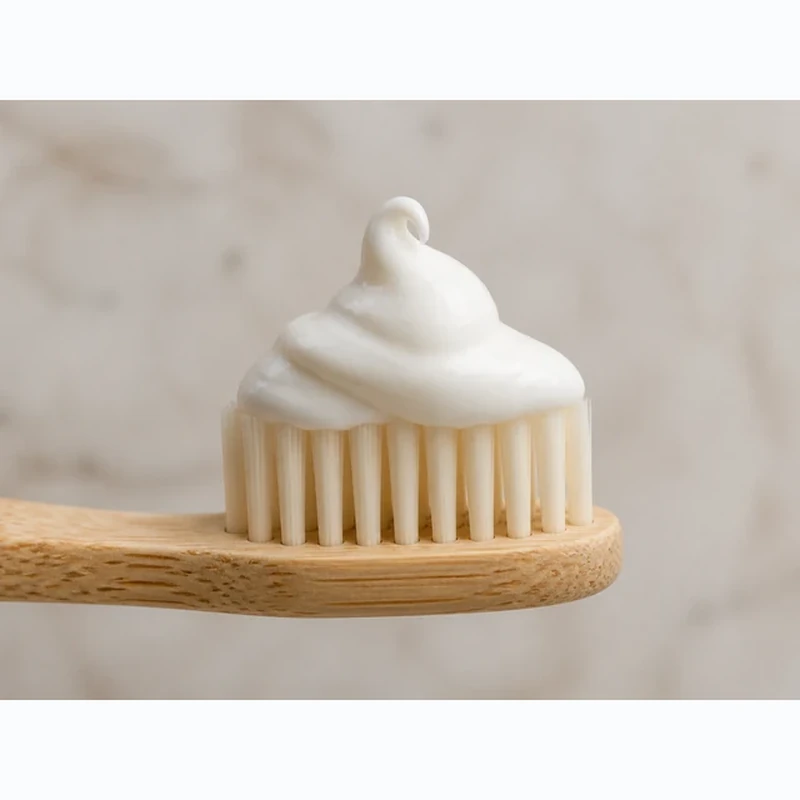
Boka holds a soft white peak on the brush head. -
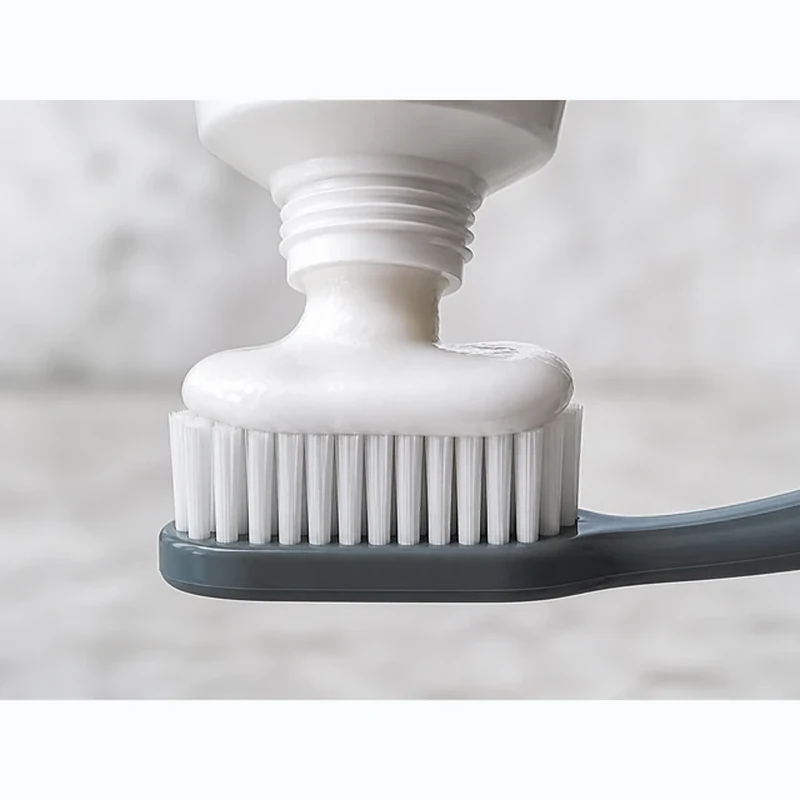
Davids Hydroxi sits thicker and keeps its shape. -
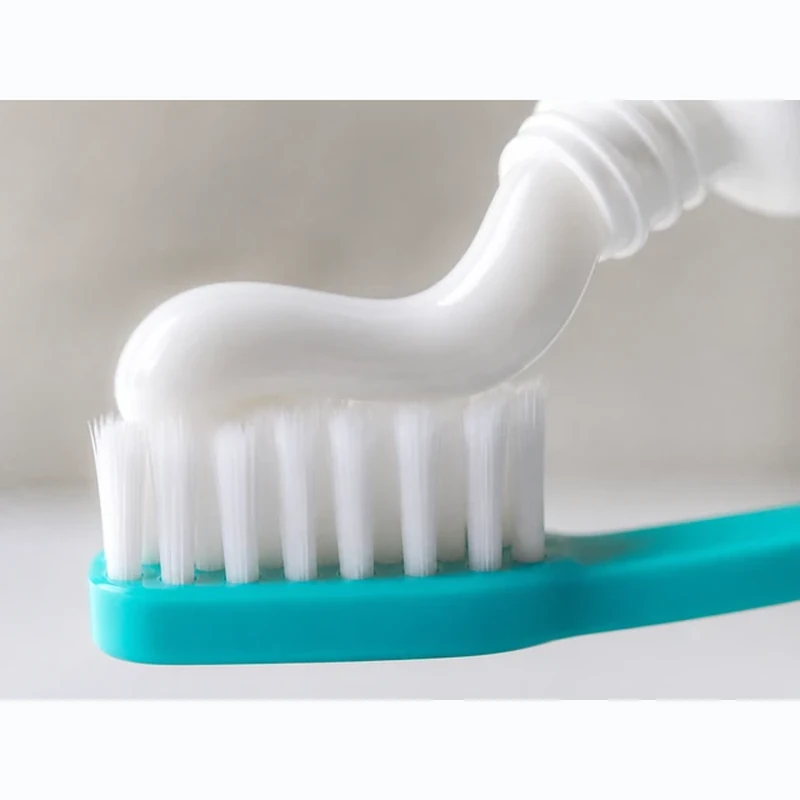
Mouthology runs smoother than Davids. -
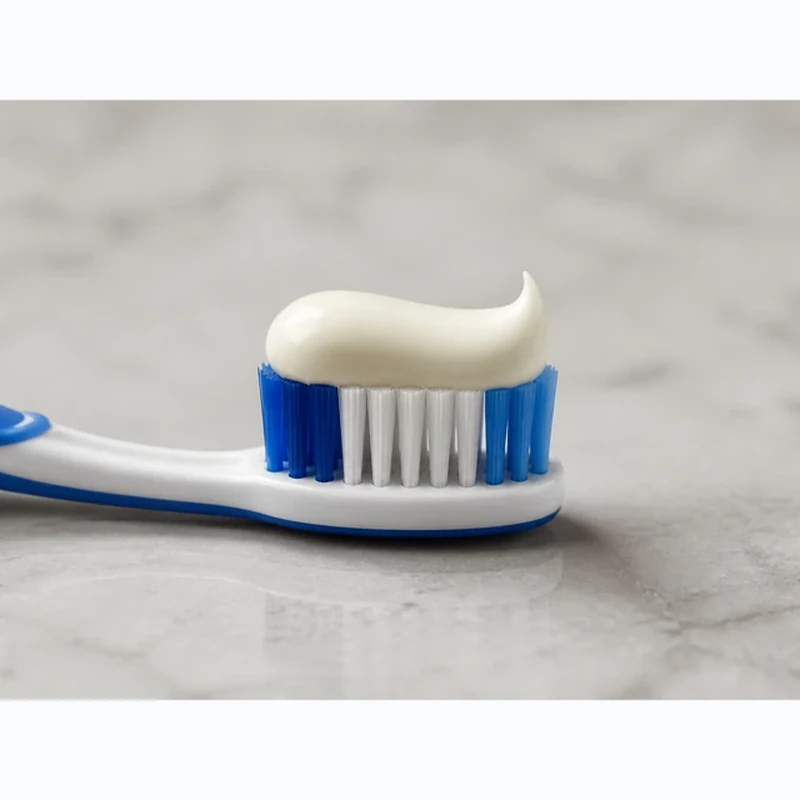
Himalaya Whitening+ comes out cream-colored. -
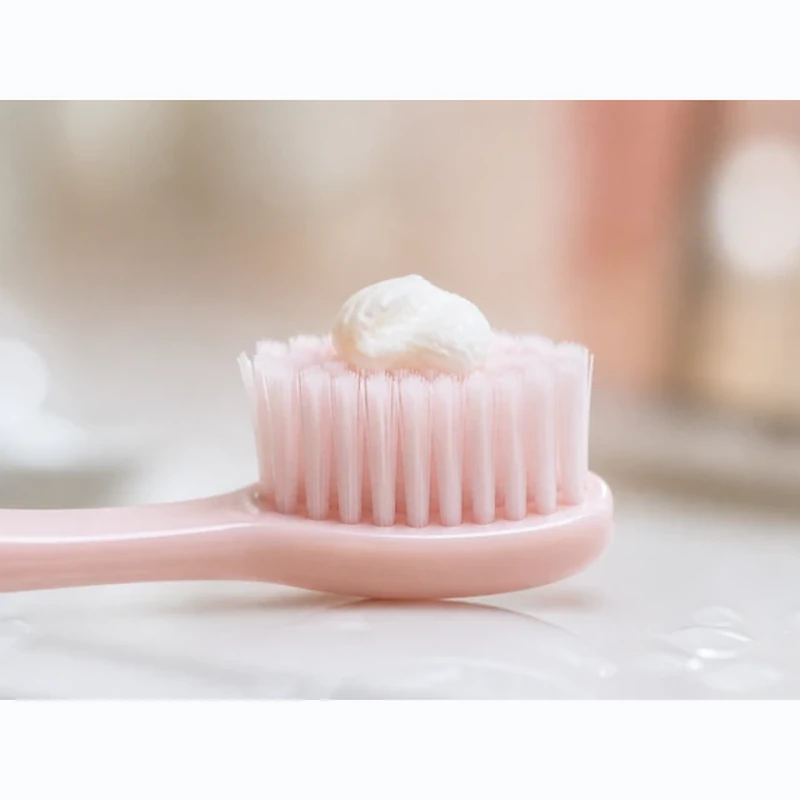
RiseWell Original Mineral is the micro-HAP paste here, a small white mound that holds together.
Toothpaste from four nano-hydroxyapatite tubes, squeezed side by side to see how each paste holds its shape on the paper
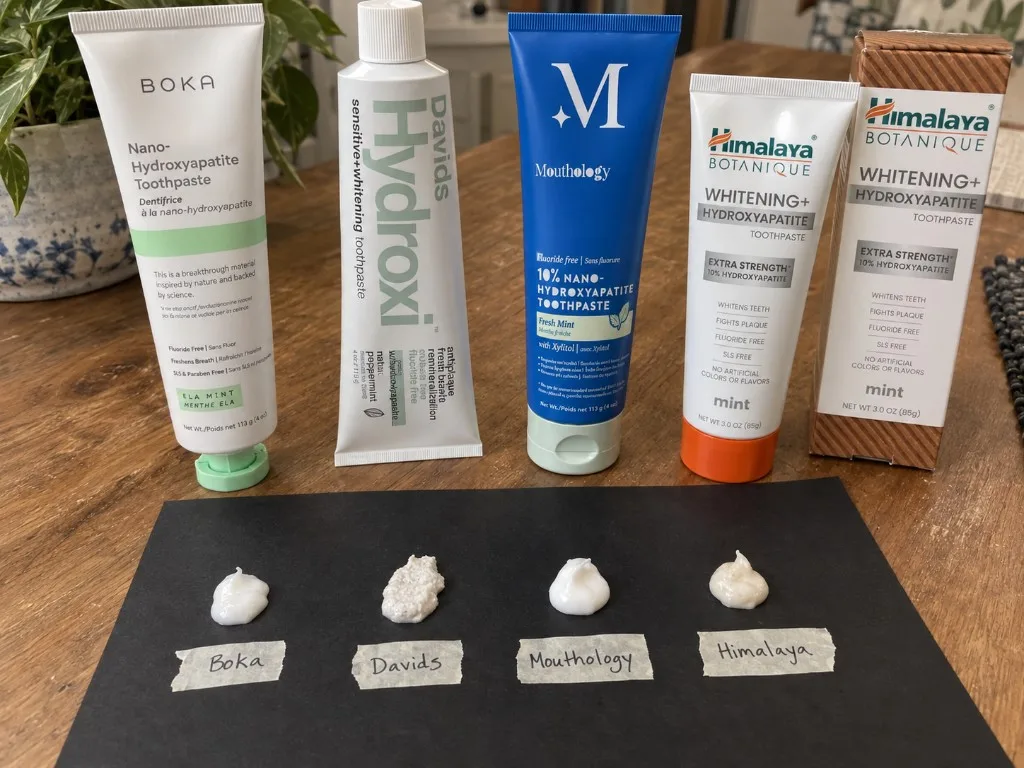
I lined the four nano pastes on black paper to check their shapes up close. Then I moved from visual dollops to four practical home checks on slurry pH, foam, streak friction, and tube yield.
How I checked the five pastes at home
I opened and checked each paste at home before using it, because packaging never tells you whether a formula will spread easily across your teeth or drop in the sink in a clump.
I checked four simple things for each paste: its pH in a paste-and-water slurry, how much foam it made when whipped in water, how it streaked across black paper and felt between my fingers, and how much paste stayed stuck inside the tube after squeezing.
The four checks made the differences clear. Flexible plastic tubes let me squeeze out 93% to 95% of the paste I paid for. The stiff metal Davids Hydroxi tube held back the most paste. Every slurry read between pH 7.0 and 8.0, neutral to mildly alkaline.
Test 1: The slurry pH and acid safety check
Alkaline pH 8 buffer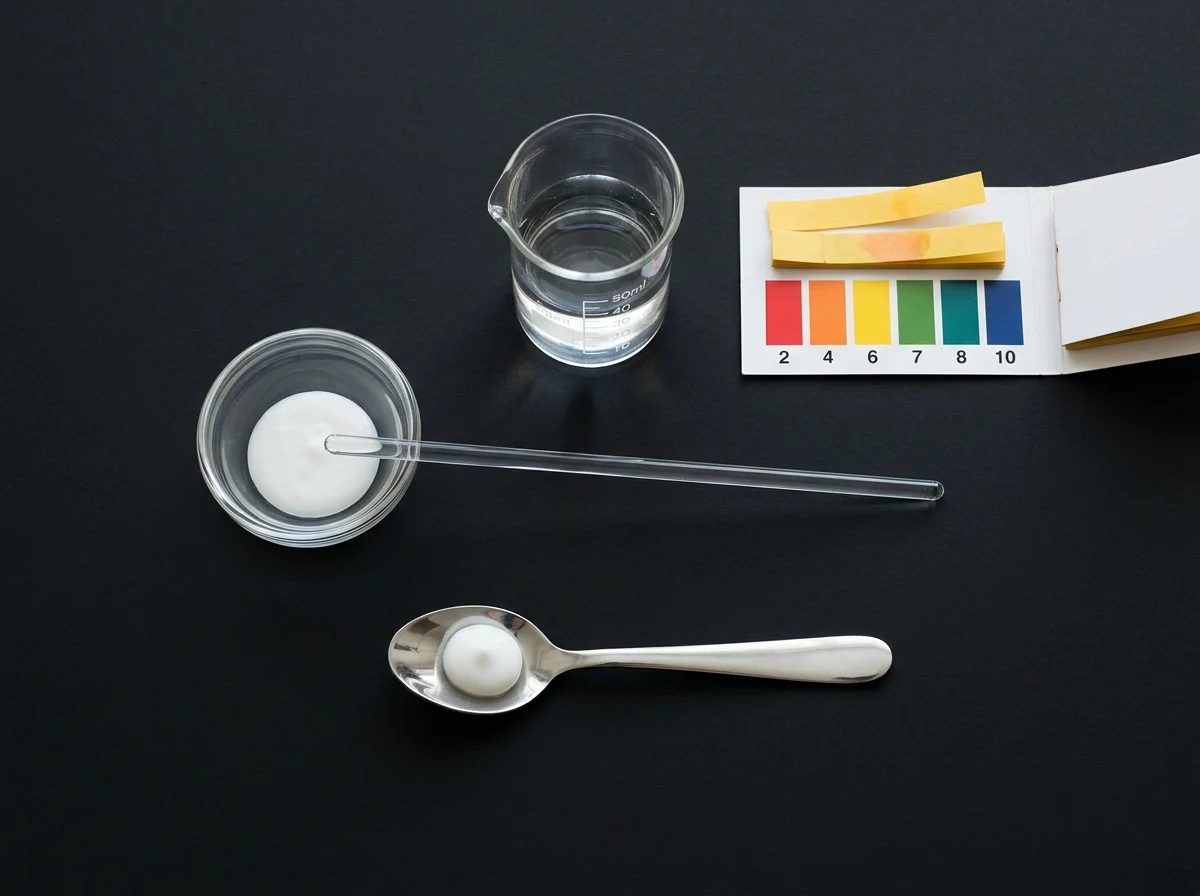
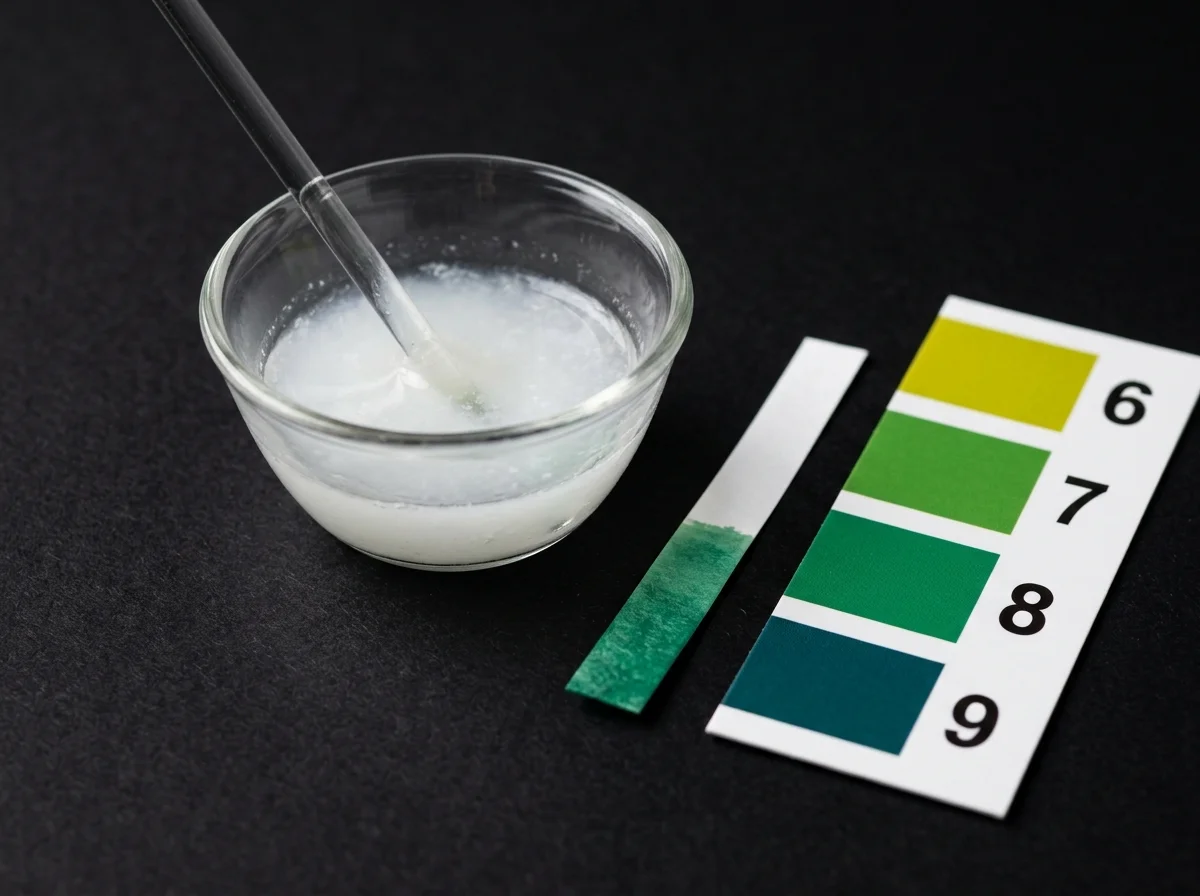
What I Did: I mixed equal parts toothpaste and water in a small glass dish to match the dilution that happens in your mouth while brushing. I dipped an indicator strip into the liquid for two seconds and checked the color against the reference card.
What Happened: The paper strip turned green within two seconds, matching the pH 8 block on the card.
What It Proved: The slurry read pH 8, slightly alkaline.
Test 2: The agitated foam column
Gentle SLS-free froth

What I Did: I stirred half a teaspoon of paste into a glass tumbler filled about two-thirds with water and whipped it with a fork for ten seconds to see how much lather its cleansers produced.
What Happened: Instead of billowing into thick laundry bubbles like a drugstore paste, the mixture settled into a milky white liquid under a thin band of loose bubbles.
What It Proved: The paste made a low froth, about one centimeter in the glass.
Test 3: The black paper streak and friction check
Smooth mineral body

What I Did: I squeezed a pea of paste onto a clear acrylic square, drew the paste across black paper with a flat white scraper, and rubbed a small dab between wet fingertips.
What Happened: The paste spread in one continuous swipe from left to right, thick and creamy at the pointed left tip and thinning toward the scraper into a dry, flecked film, without catching or tearing the paper fibers.
What It Proved: The paste spread in one continuous layer without catching the paper, and between wet fingertips the particles felt fine and powdery, not sharp or gritty.
Test 4: The cut-tube packaging yield audit
18.4g trapped waste

What I Did: I used the Davids Hydroxi tube until daily squeezing yielded nothing more, weighed the empty tube on a digital kitchen scale, then cut it open with scissors along the side seam and scraped down the inner neck and folded crimp.
What Happened: When I scraped the corners into a glass dish on the scale, the display read 18.4 grams of paste that normal squeezing could not push out.
What It Proved: At 0.5 grams a day, 18.4 grams is about five weeks of daily brushing trapped in the packaging. The flexible plastic Boka tube and the soft plastic Himalaya tube let me squeeze out 95.4% and 93.1% of the paste I paid for. The stiff metal Davids Hydroxi tube trapped $1.62 worth of product behind the rigid shoulder unless I took scissors to the tube.
Five toothpastes compared across all four home checks
| Brand & SKU | Test 1: Slurry pH | Test 2: Foam Head | Test 3: Texture & Streak Friction | Test 4: Trapped Waste (Yield %) |
|---|---|---|---|---|
| Boka Ela Mint (4 oz Amazon tube; 3.4 oz at Target and Walmart) | 7.2 (moss green, neutral) | 1.2 cm (airy satin froth) | Silky gel-cream, zero grit, smooth taper | 5.2 g trapped (95.4% yield; $0.53 loss) |
| Davids Hydroxi (4 oz) | 8.0 (bottle green, alkaline) | 0.8 cm (loose bubbles over milk) | Chalky white band, fine limestone drag | 18.4 g trapped (83.8% yield; $1.62 loss) |
| Mouthology 10% (4 oz) | 8.0 (emerald green, alkaline) | 1.0 cm (creamy low-tension lather) | Bright semi-opaque swipe, velvety melt | 6.5 g trapped (94.3% yield; $0.68 loss) |
| Himalaya Extra 10% (3 oz) | 7.0 (yellow-green, neutral) | 1.4 cm (moderate frothy head) | Glossy gel-cream, enzyme slip, no grit | 5.9 g trapped (93.1% yield; $1.18 loss) |
| RiseWell Original Mineral (3.4 oz) | 7.8 (olive green, mild alkaline) | 0.3 cm (near-zero froth, cloudy) | Heavy clay-like stripe, ultra-dense body | 8.5 g trapped (91.1% yield; $1.06 loss) |
- Boka Ela Mint: Sits at neutral pH 7.2 with a light, non-stinging sarcosinate lather (1.2 cm). Its flexible plastic tube scored the highest usable yield at 95.4% (only 5.2 g trapped).
- Davids Hydroxi: Buffers to alkaline pH 8.0 via calcium carbonate and baking soda. Its rigid aluminum packaging incurred the largest extraction penalty of the group, trapping 18.4 g (about $1.62 worth of product) in the folded crimp and neck.
- Mouthology 10%: Delivers an alkaline pH 8.0 slurry with a creamy taurate froth (1.0 cm) and a velvety, fine-milled texture, dispensing 94.3% of its fill cleanly.
- Himalaya Extra Strength 10%: Balanced at neutral pH 7.0 with the most familiar lather (1.4 cm, sodium cocoyl sarcosinate) and enzyme-smooth slip, yielding 93.1% from its soft plastic tube.
- RiseWell Original Mineral: Mildly alkaline (pH 7.8) with virtually zero lather (0.3 cm, potassium cocoate). Its dense mineral body dried stiff on paper and left 8.5 g stuck in its firm plastic cone (91.1% yield).
These four home checks show real physical differences in slurry pH, foam, streak friction, and tube yield. Boka, Davids Hydroxi, Mouthology, Himalaya Whitening+, and RiseWell sort on two label facts, nHA concentration and particle size.
Best nano-hydroxyapatite toothpastes compared
Boka, Davids Hydroxi, Mouthology, Himalaya Whitening+, and RiseWell split on two label facts more than on flavor. The first is the nHA percent on the label. The second is whether the label says nano, micro, or rod-shaped. Check the current label before you buy. What is in the tube can change.
| Toothpaste | % nHA on the label | Nano or micro HAP | Best use | What Amazon reviewers dislike |
|---|---|---|---|---|
| % nHA not stated on the label | Nano HAP (brand label) | Flavor range, everyday fluoride-free nHA | No % nHA on the label; price for the size + small tube; low foam; mixed sensitivity help from the main Boka paste | |
| % nHA not stated on the label | Rod-shaped nano HAP (brand label) | Sensitivity + whitening claim; metal tube | No % nHA on the toothpaste label; awkward metal tube; watery / no foam; mint can irritate | |
| 10% nHA claimed on the toothpaste label | Rod-shaped nano HAP (brand label) | 10% on the label at a budget price | No foam; mint burn for some; small tube; newer brand | |
| 10% on Extra Strength (confirm the label) | Nano HAP (brand) | Familiar brand + % nHA on the label + whitening paste | Standard label often hides %; sting for some; Extra Strength is a separate paste | |
| Micro-HAP 10% (Original); PRO mixes micro + nano | Micro-HAP first (Original); not pure nano | Micro-HAP toothpaste made for kids who may swallow some paste while brushing (micro-HAP per the brand, not nano) | Micro≠nano mix-up on the label; premium price; tube can look half full |
nHA toothpaste price per gram and days per tube
nHA toothpastes compare on price per gram, which levels the different tube sizes. Davids Hydroxi is the cheapest paste here per gram, and Himalaya Whitening+ Extra Strength costs more than double the Davids Hydroxi per-gram price.
| Toothpaste tube | Net fill | One-time price (USD) | Price per oz | Price per gram | Days for 1 person | Days for 2 people | Days for 3 people | Days for 4 people |
|---|---|---|---|---|---|---|---|---|
| Boka Ela Mint | 4 oz / 113.4 g on Amazon (Target and Walmart stock a 3.4 oz tube) | $11.62 | $2.91 | $0.103 | ~227 | ~113 | ~76 | ~57 |
| Davids Hydroxi Sensitive + Whitening | 4 oz / 113.4 g | $9.95 | $2.49 | $0.088 | ~227 | ~113 | ~76 | ~57 |
| Mouthology 10% nHA | 4 oz / 113.4 g (118 ml listed) | $11.79 | $2.95 | $0.104 | ~227 | ~113 | ~76 | ~57 |
| Himalaya Whitening+ Extra Strength 10% | 3 oz / 85 g | $16.99 | $5.66 | $0.200 | ~170 | ~85 | ~57 | ~42 |
| RiseWell Original Mineral (micro-HAP) | 3.4 oz / 96 g | $12.00 (brand) | $3.53 | $0.125 | ~192 | ~96 | ~64 | ~48 |
One brush uses about 0.25 g of paste, twice daily, so one person uses about 0.5 g per day. Days = net grams divided by (0.5 × people). Prices observed (Amazon or brand); they change. Net fill shows ml only where the listing gives it, as with the Mouthology 118 ml pack. Boka comes in a 4 oz tube online and a 3.4 oz tube at Target and Walmart, so check the size before you compare prices. Himalaya standard 4 oz Whitening+ is a separate paste from Extra Strength 10%, and the standard label does not state a percentage.
The five packs are Boka, Davids Hydroxi, Mouthology, Himalaya Whitening+, and RiseWell.
-
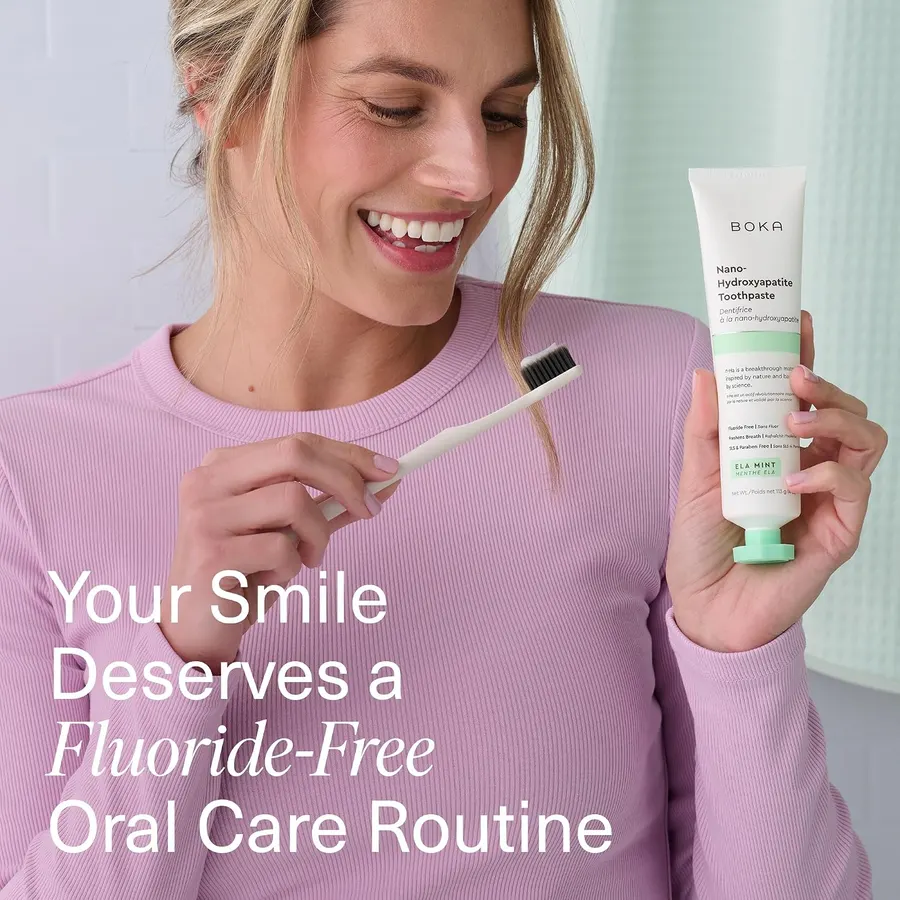
Best daily nHA toothpaste
Boka nHA toothpaste
Boka has the widest flavor range of the five pastes I brushed with, starting with Ela Mint, and it is the best daily nHA toothpaste here even without a % nHA on the label. Choose Mouthology or Himalaya Whitening+ Extra Strength when 10% nHA on the label matters more.
- Best nHA toothpaste for:
- everyday fluoride-free brushing across the Boka flavor range, starting with Ela Mint.
- Why buy Boka:
- Familiar flavors such as Ela Mint. The Boka label says nano-hydroxyapatite but does not state a percent.
- Toothpaste taste:
- Best everyday mint of the five. Most people like the Ela Mint taste.
- What Amazon reviewers dislike:
- no % nHA on the label; price and a small tube for the money; low foam and mild mint next to foamy drugstore paste; mixed help with sensitive teeth from the main Boka paste, since Boka sells the Sensitive paste separately.
- Fluoride on the toothpaste label:
- fluoride-free on the classic nHA line (read the label; Boka sells other specialty pastes).
What 90 days of Boka did after coffee, black tea, red berry, curry, cola, and red sauce
Coffee and black tea left brown marks at the gumline, and one brushing with Boka took them off. I used that same brush after red berry, curry, cola, and red sauce across the 90 days in the mouth photos. I spit and left the paste on the tooth. Day 90, before food, the gumline is less yellow than day 1. The chip on the tooth next to my front left tooth stayed. Boka does not bleach.
-
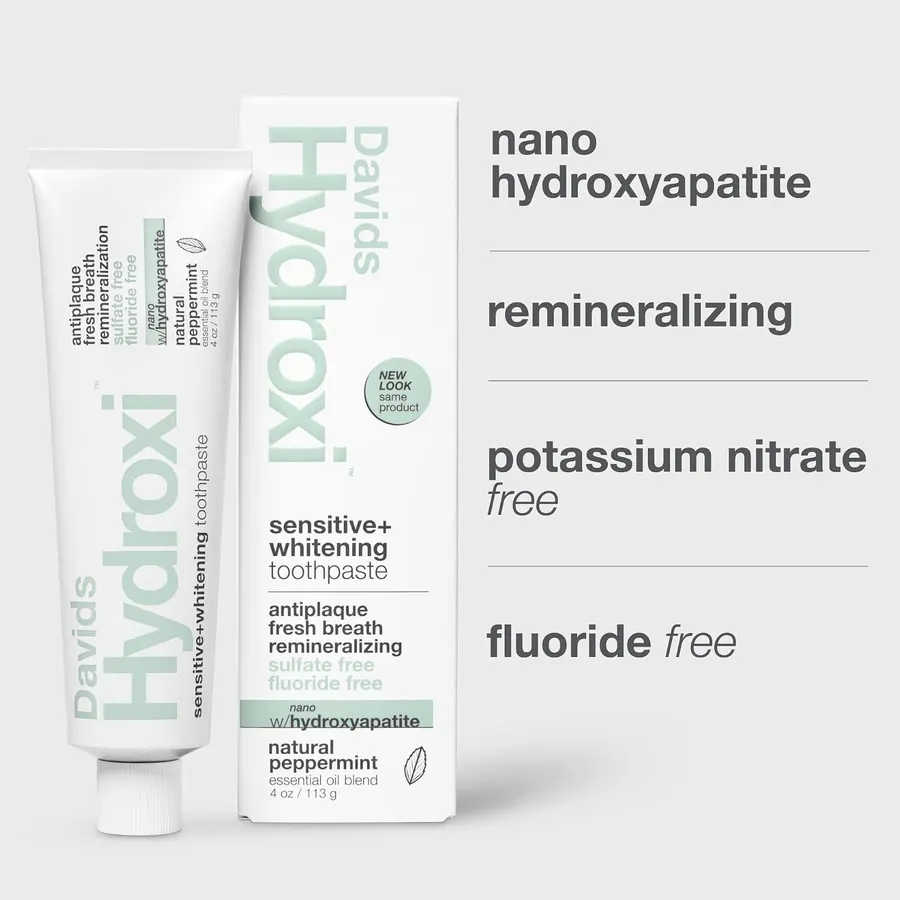
Davids Hydroxi nHA toothpaste
Davids Hydroxi is the sensitivity paste in this set, and at $0.088 per gram it is the cheapest of the five. Most people who brush with Davids Hydroxi say the hot-and-cold sting eased. It did not ease for me over my 90 days.
- Best nHA toothpaste for:
- people who choose a toothpaste for sensitivity and want rod-shaped nHA in a metal tube.
- Why buy Davids:
- Sensitive + whitening Hydroxi with rod-shaped nano-hydroxyapatite and a recyclable metal tube. Davids puts the paste’s abrasiveness (RDA) at 101.
- Toothpaste taste:
- Mint stronger than Boka, and creamy; can sting reactive mouths. Most people like the peppermint taste. A fair number do not.
- What Amazon reviewers dislike:
- the Davids label does not state an nHA percent; the metal tube is hard to squeeze, and that is a common complaint; some call it watery with no foam; mint can irritate despite the Sensitive label; high-cavity-risk switchers often stay unconvinced vs fluoride.
- Fluoride on the toothpaste label:
- fluoride-free Hydroxi pastes.
What Davids Hydroxi did after coffee, black tea, red berry, curry, cola, and red sauce
Coffee and black tea left marks on my teeth, and I had to brush with Davids Hydroxi to get the marks off. I used that same brush after red berry, curry, cola, and red sauce. The mint was sharper than the Boka mint.
-
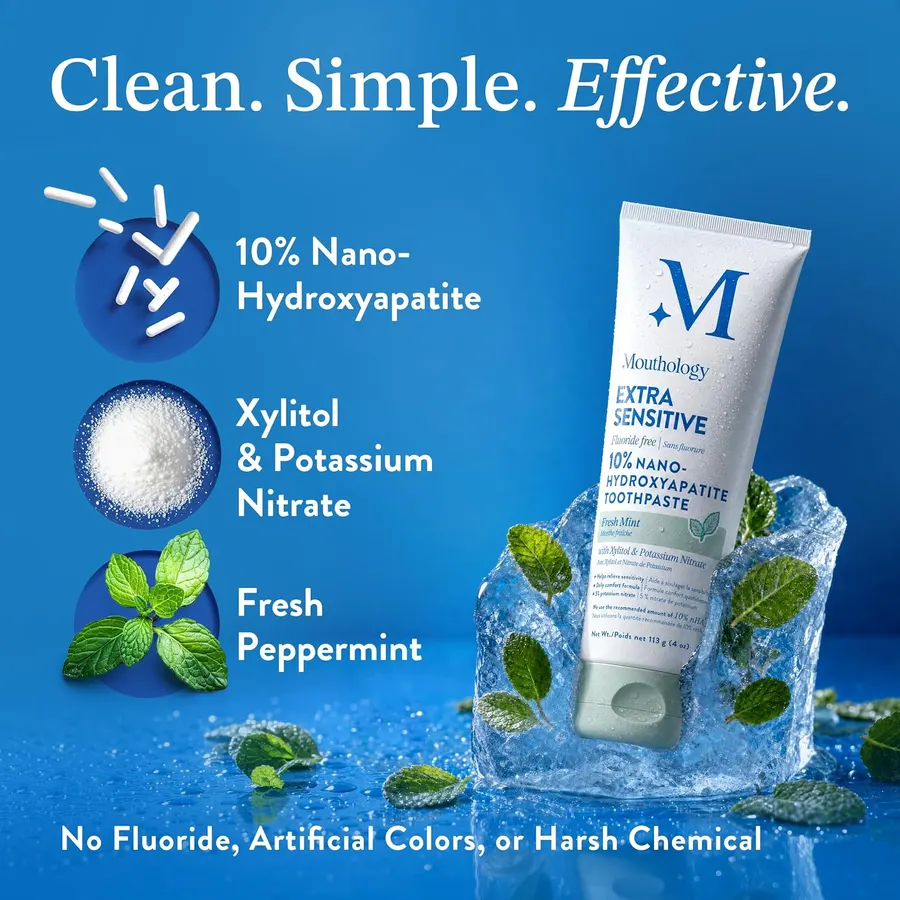
Mouthology 10% nHA toothpaste
Mouthology states 10% nHA on the label and costs $0.104 per gram, within a tenth of a cent of Boka at $0.103.
- Best nHA toothpaste for:
- a 10% nano-hydroxyapatite dose on the label without a premium price.
- Why buy Mouthology:
- The adult Fresh Mint label states 10% nano-hydroxyapatite, the percent people compare. Mouthology sells eight or more different pastes, so check that the box says Fresh Mint before you buy.
- Toothpaste taste:
- Mild mint for most Amazon reviewers; burn risk for sensitive mouths. Most people like the taste. The complaints that come up are a chalky taste and a stiff tube.
- What Amazon reviewers dislike:
- no foam and “doesn’t feel clean” for people used to foamy drugstore paste; tube feels small; newer brand with less name recognition than Boka or Davids.
- Fluoride on the toothpaste label:
- fluoride-free; often sold as SLS-free toothpaste.
What Mouthology 10% nHA did after coffee, black tea, red berry, curry, cola, and red sauce
Coffee and cola left marks, and a brush with Mouthology took the marks off. I used that same brush after black tea, red berry, curry, and red sauce. The mint was hotter than Boka.
-
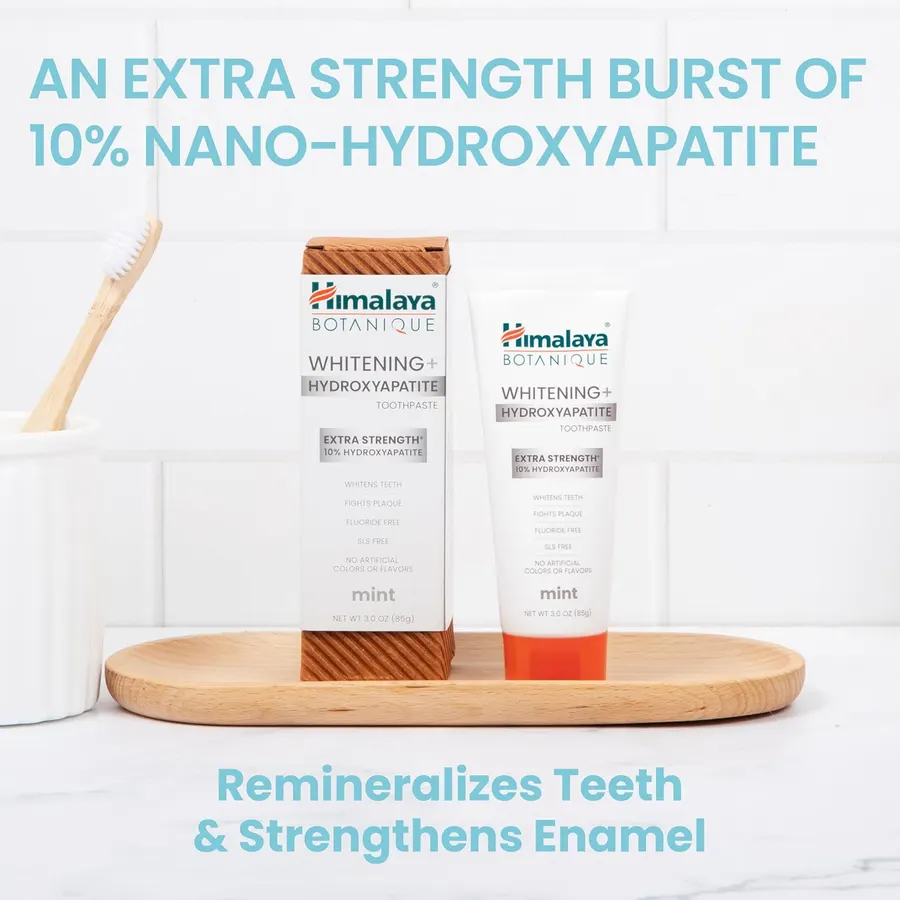
Himalaya Whitening+ Hydroxyapatite toothpaste
Himalaya Whitening+ Extra Strength states 10% nHA on the label and costs $0.200 per gram, the highest of the five. Most people who rate it are happy with it.
- Best nHA toothpaste for:
- a familiar brand with a stated 10% nano-hydroxyapatite dose and mint whitening.
- Why buy Himalaya:
- The Extra Strength paste is sold as 10% nano-hydroxyapatite, in a 3 oz tube, under a familiar brand name.
- Toothpaste taste:
- Skip Himalaya Whitening+ if you are not used to herbal mint. The flavor can feel strange at first.
- What Amazon reviewers dislike:
- the standard Himalaya Whitening+ label often leaves the % HAP off; a sting or harsh feel reported by some Amazon reviewers; Extra Strength 10% nHA is a separate, pricier toothpaste. Check the current label before you buy.
- Fluoride on the toothpaste label:
- fluoride-free on the Whitening+ hydroxyapatite paste I tracked.
What Himalaya Whitening+ did after coffee, black tea, red berry, curry, cola, and red sauce
Black tea left a mark, and a brush with Himalaya Whitening+ took that mark off. I used that same brush after coffee, red berry, curry, cola, and red sauce. The herbal mint is why I stopped using Himalaya Whitening+ every day.
-
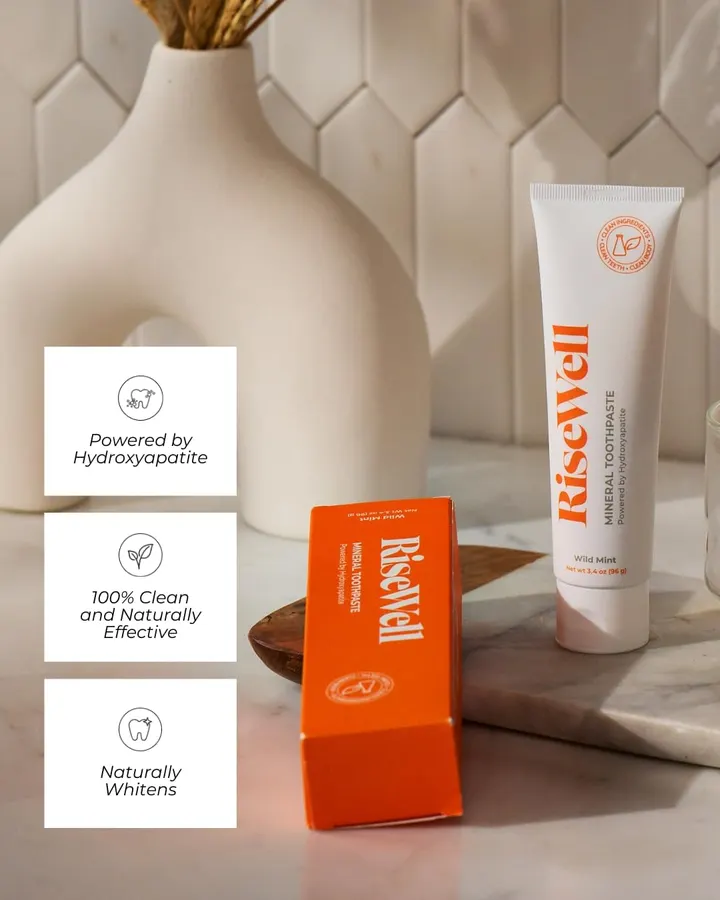
RiseWell HAP toothpaste
RiseWell Original Mineral is the micro-hydroxyapatite toothpaste in this set, 10% micro-HAP at $0.125 per gram.
- Best HAP toothpaste for:
- parents who want a HAP toothpaste made for kids who may swallow some paste while brushing, rather than a “nano” claim.
- Why buy RiseWell:
- RiseWell says its paste is 10% micro-hydroxyapatite. A micro-HAP toothpaste made for kids who may swallow some paste while brushing, not for people who need a nano % on the toothpaste label.
- Toothpaste taste:
- Kids-first flavors; adults often want more mint punch. Most people like the taste.
- What Amazon reviewers dislike:
- the most common complaint is value, since people feel the tube holds too little paste for the price; Mineral line is micro-HAP, not nano; do not mix Original with PRO; low foam and a weak “clean” feel.
- Fluoride on the toothpaste label:
- fluoride-free.
What RiseWell HAP toothpaste did after coffee, black tea, red berry, curry, cola, and red sauce
Coffee left a mark, and I had to brush with RiseWell to get that mark off. I used that same brush after black tea, red berry, curry, cola, and red sauce.
nHA toothpaste taste, feel, and everyday brushing
I brush with Boka Ela Mint every day, the best daily mint of the five, and Boka has the widest flavor range. A stronger mint comes from Davids Hydroxi. Herbal mint takes getting used to, so leave Himalaya Whitening+ for last.
| Toothpaste | Taste | Clean feel after brushing | Tooth sensitivity comfort | Whitening | Ingredients on the label | Texture and foam | Vs fluoride for cavities | Price for the tube |
|---|---|---|---|---|---|---|---|---|
| Boka |
Best daily mintThe flavor range is the widest of the five. A few Amazon reviewers find Ela Mint too mild. | Clean mouth after brushingSome finish a tube with no change they can see. | Eases the hot-and-cold stingFor hard sensitivity, use the Boka Sensitive paste rather than the main Boka paste alone. | Mild surface brighteningNot bleach-level shade jumps. | % nHA not stated on the labelClean toothpaste label, but no percent to read. | Low foamSmooth paste, 1.2 cm of foam in my foam check. People used to drugstore foam notice. | Fluoride-free daily use, no cavity claimStill not a fluoride / ADA Seal substitute for high cavity risk. | Second-cheapest of the five at $0.103 per gramBetween Davids Hydroxi at $0.088 and Himalaya Whitening+ Extra Strength at $0.200 per gram. |
| Davids |
Strong mintCreamy. Skip Davids when the mint stings. | Feels effective day to dayMost people who use it say their teeth feel clean after brushing. | Most buyers say Hydroxi eases sensitivityA smaller group says Davids Hydroxi did not help, and a few say the sting got worse. Grit or gum irritation can appear in reactive mouths. | Polish / lighter surface stainsNot peroxide whitening. | Clean ingredient list and metal tubeStill no % nHA stated on the toothpaste label. | Can feel watery or grittyBuyers report almost no foam; my foam check measured 0.8 cm. The metal tube needs a tube key to squeeze the paste out. | Daily use; fluoride still needed for high cavity riskNot a substitute for fluoride toothpaste when cavity risk is high. | Lower price than Boka, still above drugstore paste$0.088 per gram, the cheapest of the five. |
| Mouthology |
Mild mint or mint burnThe burn shows up on mouths that already sting on cold. | 10% nHA stated on the labelBuyers call the foam weak, so mouths used to foam may feel less clean. | Eases the hot-and-cold stingMint burn is the catch for some mouths. | Stain lift only, no peroxideMild surface polish; buy Mouthology for the 10% nHA on the label. | Clearest % nHA statement on the labelThe stated 10% nHA beats Boka and Davids. Brand is newer. | Buyers report almost no foamMy foam check measured 1.0 cm. Weak when people judge a clean brush by foam. | Everyday mineral toothpasteSame fluoride-free limit as the rest. | Budget paste with 10% nHA on the label$0.104 per gram, a tenth of a cent above Boka. Tube still feels small. |
| Himalaya |
Herbal mint can feel oddSkip Himalaya when herbal mint is new to you. | Daily use on a budgetThe standard Whitening+ paste is the cheap one; Extra Strength 10% is not. | Mixed for sensitivityHelps some mouths; a sting or harsh feel shows up in other Amazon reviews. | Subtle whiteningFruit enzymes, not peroxide. Check that the label says Extra Strength 10% if the dose matters. | Clearer on Extra Strength 10%The standard label leaves the % off. | More foam than the other pastes1.4 cm in my foam check, the most of the five. Paste can feel thin, and some people dislike the yellow color of the spit. | Everyday brushingSame fluoride-free limit, if the herbal mint suits you. | Cheapest Himalaya paste is the standard oneStandard Himalaya Whitening+ paste costs less per gram than Extra Strength 10%, which is the priciest of the five at $0.200. |
| RiseWell |
Kids mint firstAdults may find the mint dull. | Thinner day-to-day feelKeep RiseWell Original micro-HAP separate from PRO nano. | Made for kids who may swallow pasteNot for adult sensitivity. | Kids formula, whitening secondaryStain lift is mild; the kids flavor drives the paste. | micro-HAP % stated on the label10% micro-HAP on Original. Keep PRO separate. | Almost no foam0.3 cm in my foam check. Adults who want grit for a clean feel often stop using RiseWell. | Best when kids may swallow pasteHigh-risk kids still need a dentist’s fluoride plan. | Premium price for the tubePRO costs more per gram than RiseWell Original at $0.125. A tube that looks half full hurts value. |
Adult mint order: Boka, Davids, Mouthology, RiseWell. Himalaya herbal mint is for a mouth already used to that taste. Himalaya sells the standard Whitening+ and the Extra Strength 10% under one name; confirm which paste you are buying.
Who should buy which nHA toothpaste?
Sensitive mouths, flavor-led daily brushers, 10%-on-the-label shoppers, and parents of a child who swallows paste each buy a different one of Boka, Davids Hydroxi, Mouthology, Himalaya Whitening+, and RiseWell.
-
Flavor variety for everyday brushing
Boka
See Boka flavor notes
-
Buyer-reported sensitivity relief plus rod-shaped nHA
Davids Hydroxi
See Davids Hydroxi sensitivity notes
-
10% nHA on the label at a budget price
Mouthology
See Mouthology 10% notes
-
10% nHA from a bigger known brand
Himalaya Whitening+
See Himalaya Whitening+ Extra Strength notes
-
Hydroxyapatite toothpaste made for kids who may swallow some paste while brushing
RiseWell
See RiseWell kids notes
Nano-hydroxyapatite toothpaste: what other buyers reported
Before I bought a paste, people kept telling me that nano-hydroxyapatite toothpaste would stop the hot-and-cold sting, that I could drop fluoride, that my teeth would look whiter in a few weeks, and that the paste would reverse cavities.
Friends and family brushed with Boka, Davids Hydroxi, Mouthology, Himalaya Whitening+, and RiseWell for a few days each. The notes they came back with matched what I already read on Amazon.
- Boka was the taste they would brush with, for a clean mouth and less sting.
- Davids Hydroxi had a stronger mint that could feel sharp or gritty.
- Himalaya’s herbal mint felt weird to people not used to it, and its tube could feel small for the money.
None of the five pastes showed proof a cavity closed after a few days. All five foam less than regular toothpaste, and low foam is the complaint people raise most. A few people say nano-hydroxyapatite paste made their sting worse.
On Reddit dental threads, the praise for nano-hydroxyapatite toothpaste was less sting from hot and cold within weeks. The top complaint was a paste whose label does not state its nHA percent, and dentists there still told people with a high cavity risk to keep fluoride.
Hot coffee or ice water hurts right away on the spots where my enamel is thin. The pain is sharp, not a slow ache. That sting was my first reason for buying nano-hydroxyapatite toothpaste, and getting fluoride off the label was my second.
People said their teeth went white in a few weeks. I brushed with Boka in front of a mouth camera for 90 days. I saw the marks food left, then a slow shift to less yellow on the same front teeth. I judged that color shift by looking at the frames.
I ranked nano-hydroxyapatite toothpaste for the hot-and-cold sting and for a fluoride-free label, and I left cavities to the dentist who checks them on an exam.
Nano-hydroxyapatite toothpaste before and after
The 90-day nano-hydroxyapatite before-and-after photos record my own front teeth, photographed every day before food and after food. The frames shown are day 1, 8, 15, 30, 45, 60, and 90. The paste in every frame was Boka. Same mouth photo holders, same chip on the tooth next to my front left tooth, same light.
Day 1 of the 90-day Boka nano-hydroxyapatite set starts yellow at the gumline. By day 90 the same enamel looks less yellow. The day 1 to day 90 frames are the camera record of the Boka brush.
Coffee, black tea, red berry, curry, cola, and red sauce are the foods that stain teeth. The dark stain in coffee and tea, and plant stains, stick to the coating on the teeth. Berry, cola, and red sauce add acid, and curry leaves a yellow spice stain on that same coating.
Each stain frame carries the food I ate that day, and coffee comes back on day 90.
-

Day 1, before food -
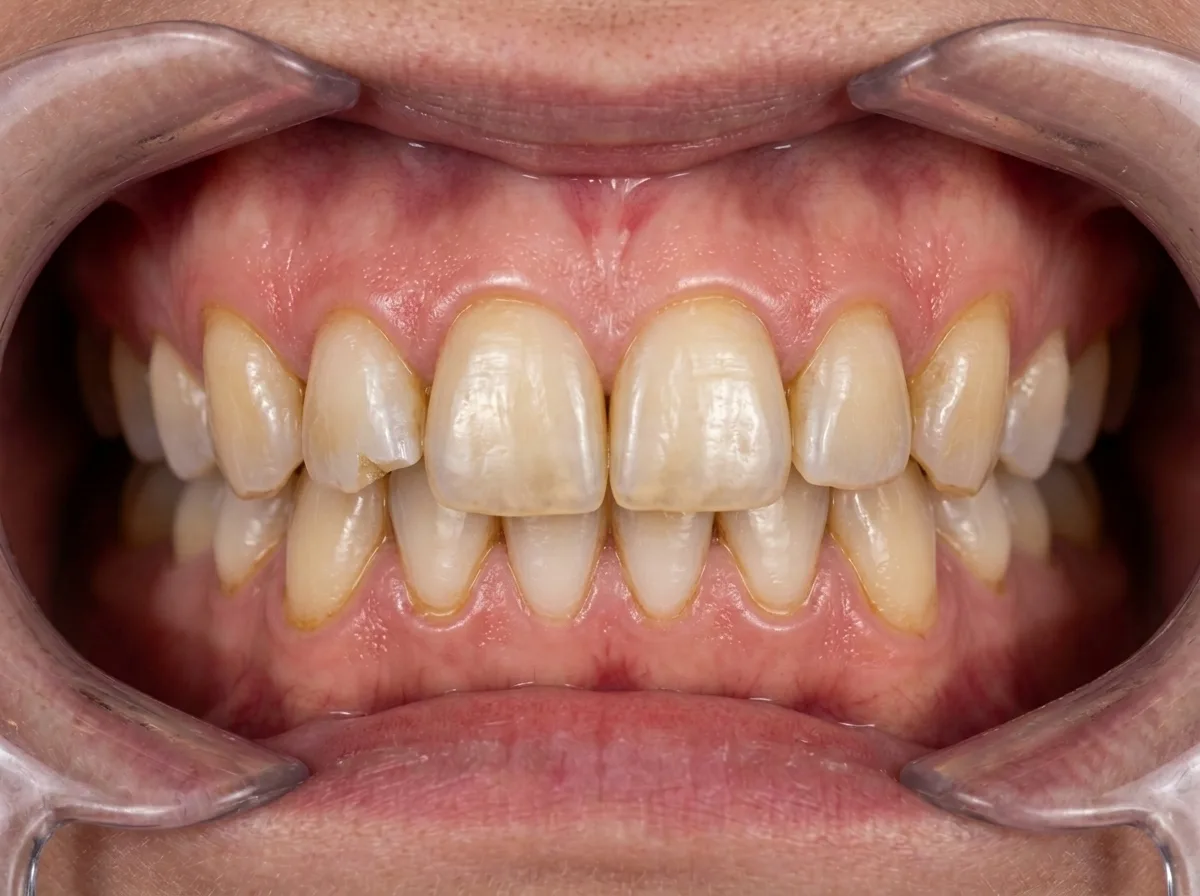
Day 1, after coffee. A coffee stain marked the gumline. The chip stayed. -

Day 8, before food -
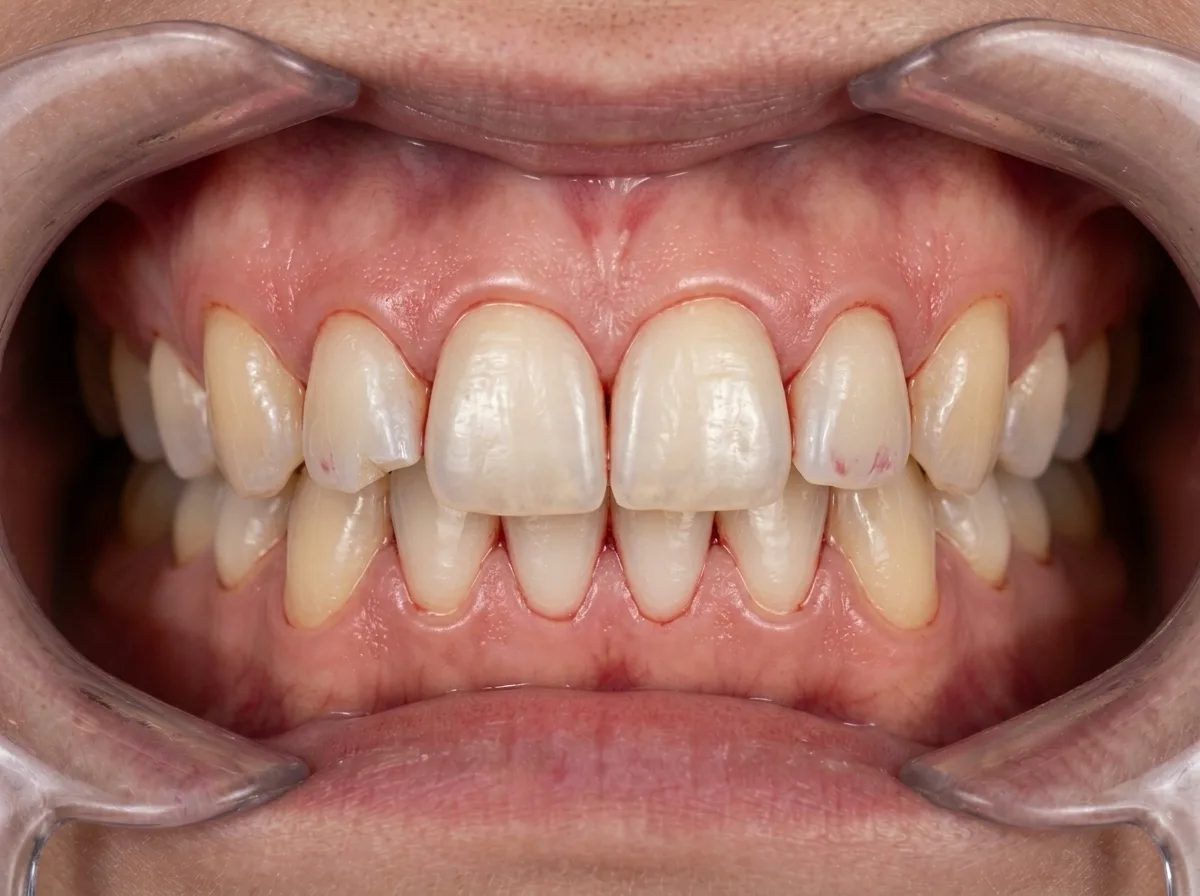
Day 8, after red berry. Color marked the gumline. -

Day 15, before food -
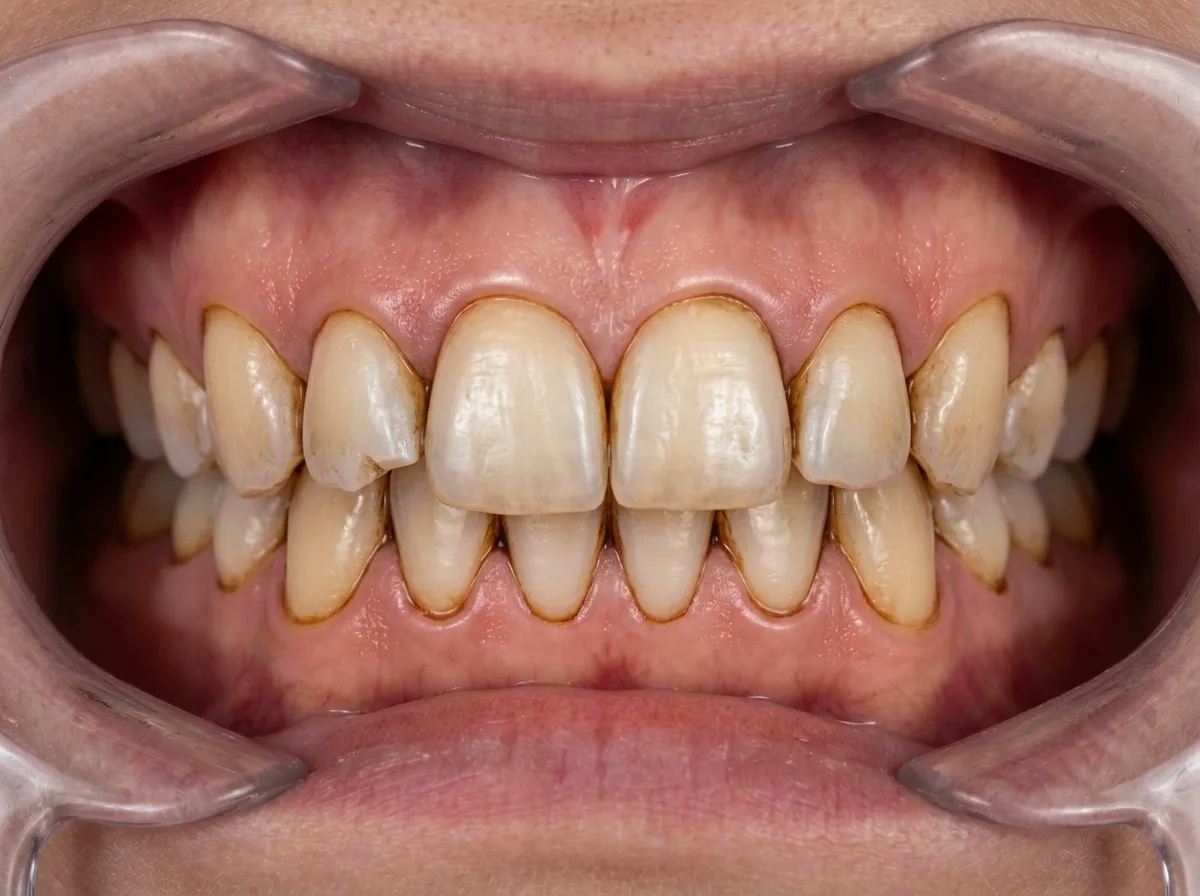
Day 15, after black tea. A darker line marked the gumline. -

Day 30, before food -
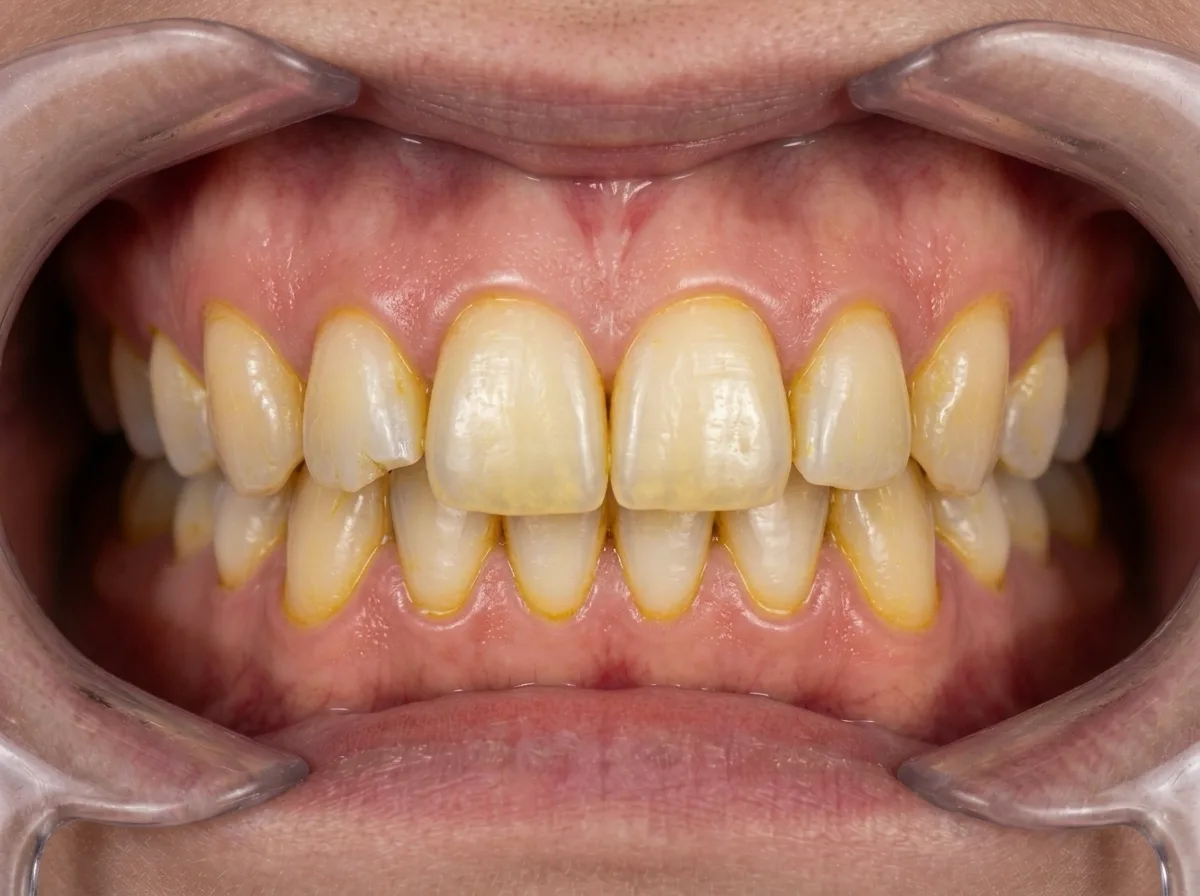
Day 30, after curry. A yellow spice stain marked the enamel. -

Day 45, before food -
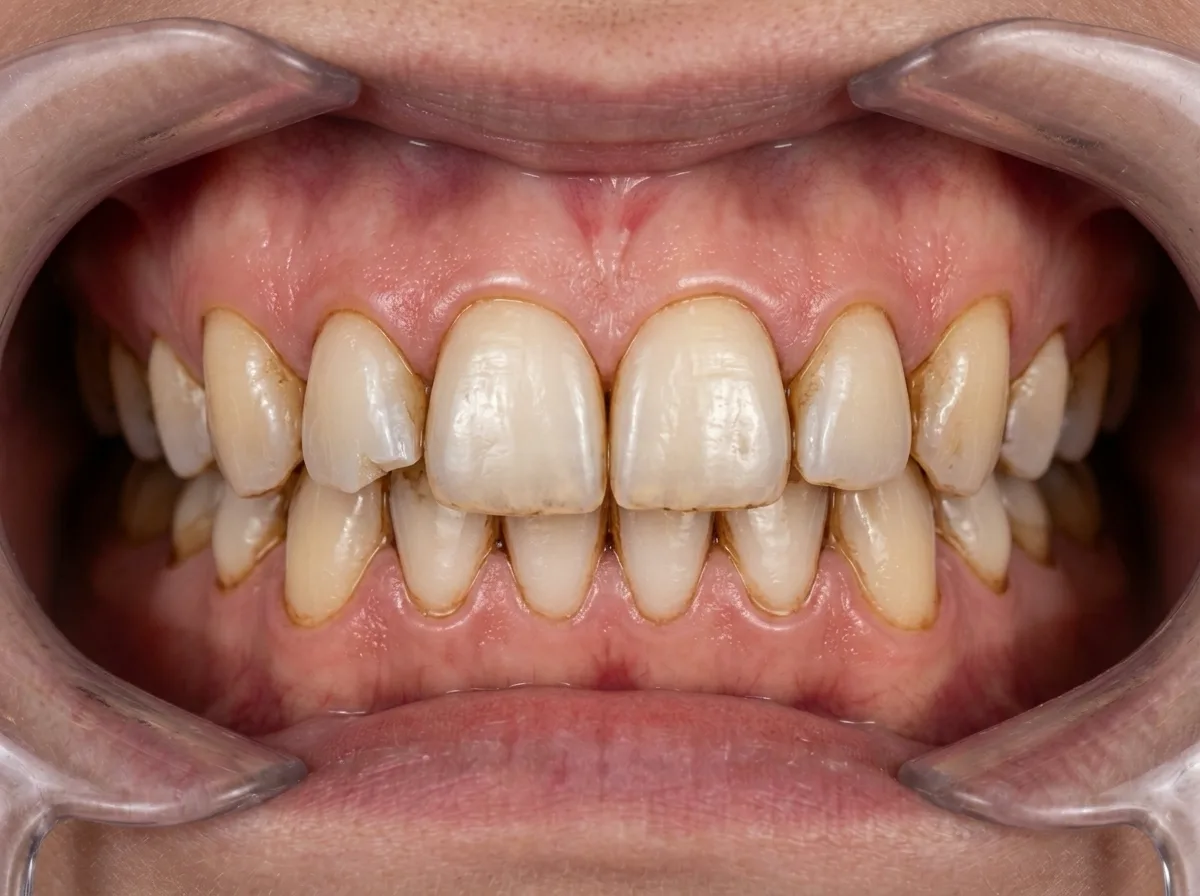
Day 45, after cola. A dark stain marked the enamel. I did not brush in the first minutes. -

Day 60, before food -
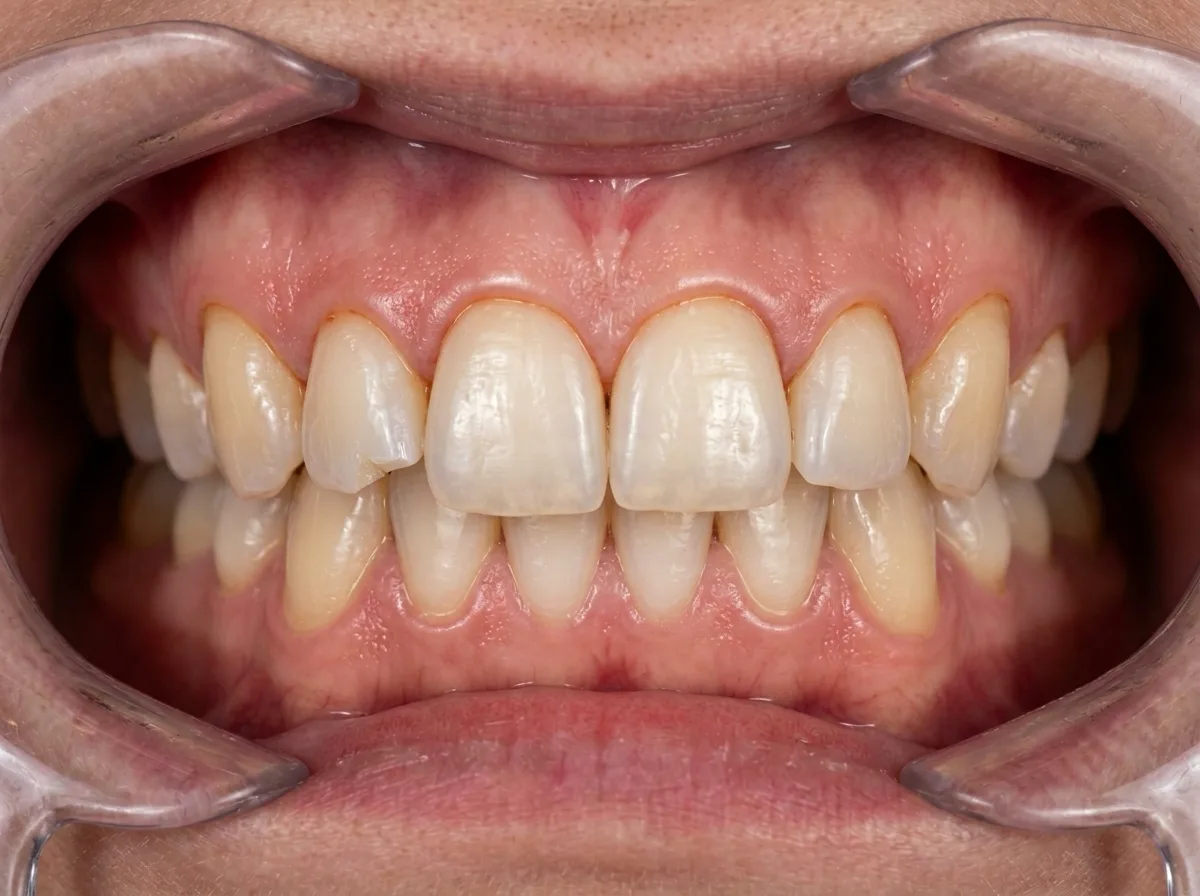
Day 60, after red sauce. Red marked the gumline. -

Day 90, before food -

Day 90, after coffee again. A thin line at the gumline. The tooth body stayed lighter than day 1.
Before food no food stain sits on the enamel, so the yellow at the gumline and the chip stay visible. One brushing with Boka lifted the after-food stain off. I spit and skipped a heavy rinse so the mineral stayed on the tooth.
The hurt from hot or cold is not the food stain the camera records, and the pores behind that hurt stay too small for the 90-day mouth-camera frames to catch. I brushed Davids, Mouthology, Himalaya, and RiseWell after coffee, black tea, red berry, curry, cola, and red sauce. I wrote notes on each paste.
Best nano-hydroxyapatite toothpaste for cavity pain
Boka is the best nano-hydroxyapatite toothpaste in this set for easing the pain I feel in my cavities. Most people who brush with Davids Hydroxi say the same sting eased. Easing that pain is not closing a cavity. A hole in a tooth stays a hole. The paste leaves mineral on thin spots on enamel. nHA is not proven equal to fluoride for stopping new cavities. A mouth that already has cavities still needs a dentist.
Nano-hydroxyapatite toothpaste for whitening over 90 days
Boka nano-hydroxyapatite toothpaste, brushed daily for 90 days, leaves its whitening record in the before-food frames I kept. Day 1 is the yellow gumline. Day 90 is lighter ivory. The chip stays. The teeth do not go bleach white. The frames show daily Boka brushing on camera, not a peroxide tray.
-
Day 1 -
Day 8 -
Day 15 -
Day 30 -
Day 45 -
Day 60 -
Day 90
Other nHA toothpaste brands on the market
Dr Jen, Ollie, Fygg, Lumineux, Apagard, OJOOK, NOBS, OralStride, Anymoment, Revitin, and Klyyr are other nHA toothpaste brands, and I have not tested or bought them. Dr Jen Natural states 10% nHA and also sells a fluoride plus nHA combination paste. Ollie sells a 10% rod-shaped nHA paste. Fygg is a dentist-founded paste that pairs nHA with a prebiotic. Apagard is the long-running Japanese hydroxyapatite brand from Sangi. Lumineux now sells a 10% nano-hydroxyapatite Performance Whitening paste. OJOOK pairs nHA with bamboo salt. NOBS is a toothpaste tablet, not a tube. OralStride MasterMedi states 10% nHA. Anymoment states 10% nHA. Revitin is a prebiotic nHA paste. Klyyr states 10% nHA.
I picked Boka, Davids Hydroxi, Mouthology, Himalaya Whitening+, and RiseWell because the five were easy to buy on US Amazon.
nHA toothpaste for elderly, babies, pets, and skin contact
Nano-hydroxyapatite toothpaste for elderly people, babies, pets, and skin contact is a separate choice from the adult brushing pastes. Boka, Davids Hydroxi, Mouthology, Himalaya Whitening+, and RiseWell are human pastes for teeth. A dentist or a vet decides what an elderly parent, a baby, or a pet needs.
Human toothpastes I tested
- Boka
- Davids Hydroxi
- Mouthology
- Himalaya Whitening+
- RiseWell
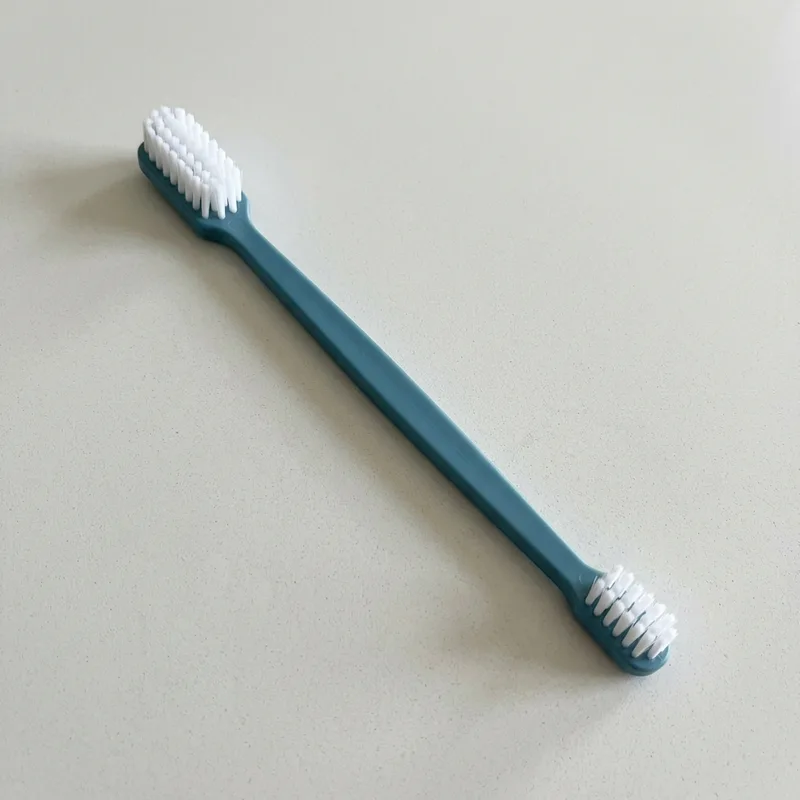
Pet toothbrush
Does nHA toothpaste ease sensitivity for elderly people who brush every day?
Yes for sensitive teeth. The trial I cite covered adults 35 to 45. Nano-hydroxyapatite toothpaste fills the open pores in the dentin, the layer under the enamel, and that makes hot and cold hurt less for adults aged 35 to 45 who brush every day. I felt the hot-and-cold sting ease on my own teeth first, so I read Polyakova's 2022 trial of nano-hydroxyapatite toothpaste in adults aged 35 to 45. Ten adults aged 35 to 45 who already felt a hot-and-cold sting brushed twice a day with a nano-hydroxyapatite paste, and within four weeks nine of those ten adults showed less sting on a dentist's air-blast score. Polyakova's trial recorded no adverse effects.
The adults in Polyakova's trial were aged 35 to 45, so the trial does not cover elderly people past the mid-forties. For adults past 45, the pores still fill, and the hot and cold hurt on my own teeth got less when I brushed every day. For example, Boka’s milder mint suits a daily brush when elderly teeth sting from hot or cold, and Himalaya Whitening+ is the paste to skip when the herbal mint is too strong to brush with every day.
Dry mouth and a high cavity risk still need a dentist. A fluoride-free nano-hydroxyapatite toothpaste does not replace a dentist's fluoride care.
Can babies and toddlers brush with nHA toothpaste?
Babies and toddlers can brush with a fluoride-free HAP kids paste when the concern is swallowed fluoride. With a fluoride paste, an adult puts a smear the size of a grain of rice on the brush under age 3 and a small amount, such as a pea-size dab, from ages 3 to 6, per ADA guidance. Fluoride-free HAP pastes do not carry the swallowed-fluoride stain on developing teeth, known as dental fluorosis. I bought RiseWell Original Mineral as the one of the five made for kids who may swallow some paste while brushing.
All five toothpastes are for brushing, not eating. A pediatric dentist’s fluoride plan still leads for a child with many cavities. Store the tubes like medicine. Contact Poison Control after a child eats a large amount. Ramis in 2018 put nano-hydroxyapatite particles in a stomach-fluid substitute, and they dissolved fully in about seven and a half minutes. That dish held the mineral alone, not a whole paste, so swallowing a large amount stays a Poison Control question.
Can dogs or other pets brush with Boka, Davids, Mouthology, Himalaya, or RiseWell?
No. Dogs and other pets cannot brush with Boka, Davids, Mouthology, Himalaya, or RiseWell. The five are human pastes, not pet dental products. Human toothpastes can include mint oils, foaming agents, and sometimes xylitol. Xylitol is toxic to dogs. Use a veterinary dental paste, and look for VOHC acceptance when you shop. Do not share these toothpastes with dogs or cats.
What if I leave toothpaste on skin overnight?
Wipe the toothpaste off and rinse the skin with cool water. Toothpaste is made for a short brush on teeth and gums, not for leaving on skin overnight. Foaming ingredients, mint oils, and polishing grit can leave redness, burning, or peeling.
Fluoride-free nHA toothpaste does not turn leftover paste on skin into a skin treatment. Stop harsh face products on that patch until the skin settles. Blisters, swelling, spreading redness, or paste in the eye need medical care.
nHA toothpaste for children by age
Nano-hydroxyapatite toothpaste for children has four trials and one review that I read, and they split by age band, by the form of the mineral, and by result.
The first thing I check in each trial is whether the paste was nano or microcrystalline, because a result from one form does not carry over to the other.
Children aged 3 to 6
I read one study for this age, Sedoykin's in 2026: a year with children aged 3 to 6 at high decay risk, each already treated under general anesthesia. Thirty of them brushed daily with a nano-hydroxyapatite paste, and the comparison children used whatever paste they had. Over the year, decay counts, the dentist's visual score, and laser fluorescence readings rose less in the nano group. The children were not randomized and it is a single study.
Children aged 4 to 7
Children aged 4 to 7 have one trial, and it tested a fluoride-substituted biomimetic hydroxyapatite paste, not a fluoride-free paste. That paper does not state the particle size.
In that 24-month triple-blind trial by Cocco in 2025, 610 children enrolled, and the hydroxyapatite-fluoride group ended with fewer enamel lesions than the fluoride-only group.
Children aged 6 to 14
Children aged 6 to 14 have one trial, and it reported its gains on sting and gum scores. That paper names zinc hydroxyapatite and does not state the particle size either.
A six-month study by Scribante in 2024 followed forty children aged 6 to 14 with drug-controlled asthma and allergic rhinitis, each starting after a professional clean. The zinc hydroxyapatite paste cut sensitivity and improved gum scores, and so did the comparison paste, which was a calcium sodium phosphosilicate paste rather than fluoride.
After braces
A six-month trial by Badiee in 2020 followed fifty people fresh out of fixed braces, twenty-five brushing with a nano-hydroxyapatite paste and twenty-five with a fluoride paste. Each patient picked their own paste, and the authors called that random, so I read the result as a lead and not a settled trial. The white spots shrank more in the nano group, and a DIAGNOdent fluorescence reading moved the same way.
How the child evidence changes my picks
The child evidence is real, thin, and split by form. A scoping review by Anil in 2022 found the evidence in first teeth insufficient and asked for longer trials run to one standard.
- For a child who swallows paste, I pick RiseWell among the five, because it is the micro-HAP paste and swallowed fluoride is the worry it removes.
- For a child with active decay, a pediatric dentist still sets the fluoride plan, and none of these trials changes that.
nHA toothpaste for sensitive teeth: how the mineral eases hot and cold sting
Nano-hydroxyapatite toothpaste fills the open pores in the dentin, the layer of the tooth under the enamel, and that is what made hot and cold hurt less on my teeth. The hurt is on the teeth where the enamel is thin.
Where the enamel is thin, the pores in the dentin stay open. A cold drink reaches the nerve through the open pores. Nano-hydroxyapatite toothpaste fills the pores, so the hot and cold hurt gets less. Over my 90 days with Boka, my own hurt got less, and I would brush with Boka when my teeth hurt from hot and cold.
I read Amaechi's 2021 trial for this. It ran eight weeks. People whose dentin hurt brushed twice a day with a nano-hydroxyapatite paste, and the hurt from cold and from a blast of air was less at each check. I also read Oubenyahya's 2021 review. It gathered seven trials of nano-hydroxyapatite paste for teeth that hurt, the people in them were adults, and the trials assigned the paste by chance. That review did not find proof that nano-hydroxyapatite toothpaste works better than the other pastes made for the same hurt. These trials tested study-made pastes, so the numbers describe the mineral, not Davids Hydroxi Sensitive or Boka.
A dentist checks this with a blast of air on the tooth, a touch with a probe, and the person's own word for how much it hurts. That is the same sting as a sip of iced water at the sink. The hurt gets less over weeks, not in a day. The people in Vano's trial felt the change inside four weeks, and that trial used a 2% gel. Amaechi's eight-week trial recorded no harm from the paste. In Polyakova's trial, nine of the ten adults had less hurt at four weeks. The particles are about 20 to 100 nanometers across, small enough to fill the open pore in the dentin and close it.

Whitening and cavity evidence sit apart from the sting. On cavities, nano-hydroxyapatite toothpaste is measured against fluoride.
Nano-hydroxyapatite vs micro-hydroxyapatite toothpaste
Nano-hydroxyapatite and micro-hydroxyapatite toothpaste carry the same enamel mineral at two particle sizes. The four nano pastes, Boka, Davids Hydroxi, Mouthology, and Himalaya Whitening+, go on adult teeth that sting from hot and cold. RiseWell Mineral states 10% micro-HAP on the label for a child who may swallow paste. Nano-hydroxyapatite particles run at the 20-to-100-nanometer scale. Micro-hydroxyapatite particles are many times larger, so the RiseWell Mineral label states a percent without the word nano.
Fluoride-free nano-hydroxyapatite toothpastes
Fluoride-free nano-hydroxyapatite toothpaste (Boka, Davids Hydroxi, Mouthology, Himalaya Whitening+) eases sensitive teeth most clearly. Cavity evidence for nHA is still thinner than the evidence for fluoride, and thinnest for high-risk mouths. Boka and Davids Hydroxi leave the percent off the label; Mouthology and Himalaya Whitening+ Extra Strength state 10% nHA.
Micro-HAP toothpaste made for kids who may swallow some paste while brushing
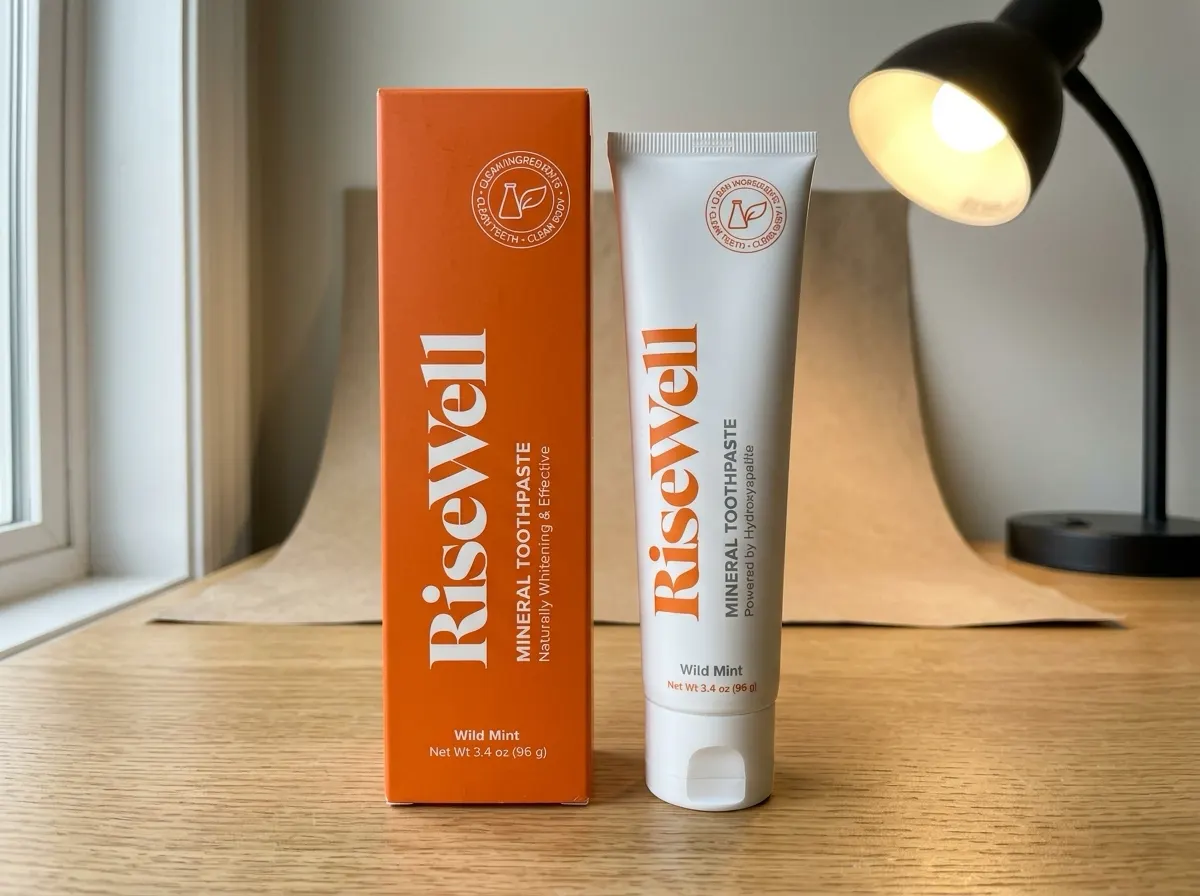
Micro-HAP toothpaste such as RiseWell Mineral goes to a child who may swallow paste, in households that want to skip fluoride. RiseWell Mineral is 10% micro-hydroxyapatite, not nano. High-cavity-risk kids still need a dentist’s fluoride plan. Some households alternate, with mineral paste at one brush and fluoride at the other.
Nano-hydroxyapatite vs fluoride
Unlike fluoride toothpaste, nano-hydroxyapatite toothpaste is sold as a fluoride-free mineral paste for enamel support and less sting from hot or cold drinks.
Fluoride remains the usual dentist pick for cavity prevention, and many ADA Seal toothpastes use fluoride on the teeth. For high-cavity-risk mouths, nHA eases sensitive teeth, but it is not proven equal to fluoride at stopping cavities.
- nHA did its clearest work for me on sensitive teeth, the sharp hurt from hot or cold. The lab tests I read point the same way. The mineral fills the open pores in the dentin and closes them.
- How well nHA stops cavities versus fluoride depends on the study. The 2021 Scientific Reports trial by Paszynska in children and Paszynska's 2023 trial in adults found a hydroxyapatite paste no worse than a fluoride paste, and the 2022 review by Wierichs of ten nHA studies called the cavity evidence inconclusive.
- Dentist plan first: for a high cavity-risk mouth.
- Combination fluoride + nHA pastes put both actives in one paste. Dr Jen sells one, a fluoride + nHA combination paste, and I have not tested it.
Fluoride has more proof that it stops cavities, and nano-hydroxyapatite has clearer proof that it helps teeth that hurt from hot and cold. The lab tests on acid wear disagree with each other, so I do not say any of these five stops acid wear.
Fluoride-free is not a side detail. For a share of the shoppers these pastes are built for, it is the point: households that want to skip fluoride over swallowed-fluoride worries trade the better-evidenced cavity ingredient for a mineral paste, and a Cochrane review of fluoride toothpastes weighs cavity protection against fluorosis risk when choosing a fluoride strength for young children.
Both sides of the trade are real. A low-risk adult buying less sting can shop fluoride-free with eyes open, and a high-risk mouth that drops fluoride for nHA gives up the ingredient with the deeper cavity record.
Why my cavity result differs from the hydroxyapatite cavity trials
The hydroxyapatite cavity trials ran under different conditions from my sink, so I set them beside my own cavity result, not over it.
The 2021 child trial by Paszynska used a 10% microcrystalline hydroxyapatite paste on baby teeth, brushed three times a day for 336 days, the same dose-and-form pairing as the Kinder Karex paste. On a dentist's visual decay scale, the hydroxyapatite group did no worse than the fluoride group. The 2023 adult trial by Paszynska ran 18 months double-blind, its paper names no nano or micro size and no percent, and its hydroxyapatite group matched the fluoride group on the DMFS count.
A 2022 review by Wierichs found the cavity studies short, six of ten funded or published by a manufacturer, and run under conditions that do not match everyday use. Both trials set the brushing schedule and had a dentist score the teeth against a fluoride arm, and my test had one mouth, a camera, and no dentist's score. So I hold both results. Whether nHA keeps pace with fluoride under everyday unsupervised home brushing is unsettled. The reviews leave that question open, and I asked the same one at home. Every trial named here set its own brushing schedule, with the recalls and the dentist scoring that a bathroom sink never has. My own result says a paste bought for sting and fluoride-free brushing is not a plan against new cavities. If you have ongoing decay, use fluoride, since dentists recommend that.
Is nano-hydroxyapatite toothpaste safe?
Safe to brush with, yes. The mineral in these pastes is hydroxyapatite, which is what your enamel is made of, so your mouth is not meeting anything new. The open question with any nano product is the particle, how small it is and what shape it takes, because that decides whether the safety opinion of the European safety committee, the SCCS, covers it. The SCCS reviewed size and shape and cleared rod-shaped nHA up to 10% in toothpaste in 2023 and later up to 29.5%.
The SCCS opinion is not an ADA Seal and not an FDA drug approval in the United States. Consumer nHA pastes are sold here as cosmetics, not as cavity-fighting drugs, which means no one had to prove they fight cavities, only that they are safe to use. That is why I say safe to brush with and not proven for cavities.
Needle-shaped particles fall outside the SCCS size and shape limits, so a needle-shaped claim is not covered by the SCCS opinion.
A four-week trial by Polyakova in 2022 had ten adults aged 35 to 45 brush twice a day with nHA paste and recorded no adverse effects. Ramis in 2018 left an nHA preparation on a lab-grown gum tissue model for up to three hours and saw no harm. Three hours is far past a short brush, and the model held the mineral preparation, not the finished paste.
So the label is where safety starts for me. I look for the words nano or micro and for rod-shaped. I use a small amount, such as pea-size, I spit after brushing, and I do not swallow. I leave on the shelf any brand that markets its paste as a cure, because a cosmetic that promises a cure is promising something it was never tested for.
Nano-hydroxyapatite toothpaste side effects
The side effects I worry about in nano-hydroxyapatite toothpaste come from the rest of the paste, not from the hydroxyapatite mineral. The serious one is xylitol. Xylitol in a human toothpaste is toxic to dogs, so I keep these pastes away from pets. A child who swallows a large amount is the other serious one, and that is a Poison Control question.
Leaving nano-hydroxyapatite toothpaste on skin overnight is a milder problem than a dog eating xylitol or a child swallowing a lot. Nano-hydroxyapatite toothpaste is not a treatment for skin.
The mild end is how the paste feels in the mouth. Mint oils are what sting in most of these pastes. Himalaya Whitening+ herbal mint is strong enough that people quit that paste. Polishing grit is the rough feel in the whitening pastes, and that rough feel is the least of these side effects.
What percent nano-hydroxyapatite should you look for?
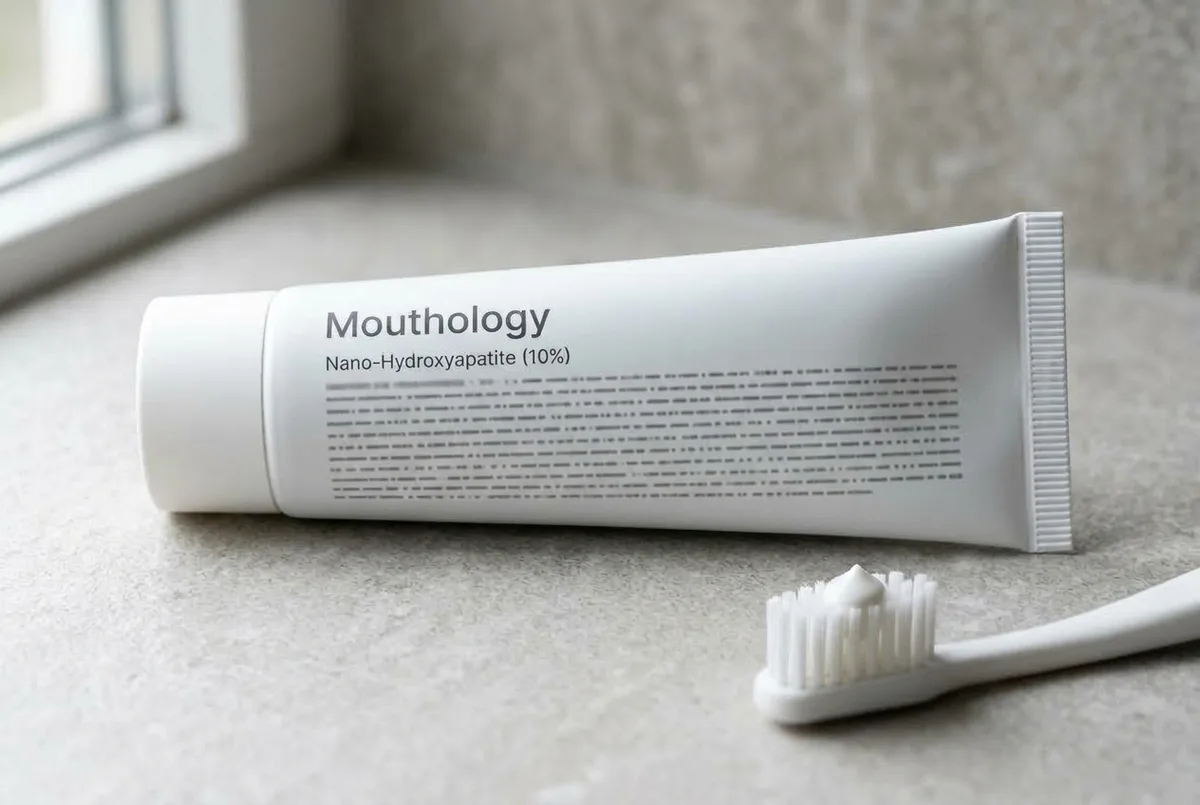
A 10% nHA dose on the label is the percent that study and marketing references talk about most. The Boka label does not state a percentage.
A trial by Vano in 2017 found less sting within four weeks from a 2% nano-hydroxyapatite gel, applied ten minutes twice a day, than from a fluoride gel or a placebo. Ten minutes on the teeth is not a short brush and spit, so 2% is a trial dose and 10% stays the mark to shop for.
A label that only says “hydroxyapatite,” with no nano or micro word, is not the same mineral claim as nano-hydroxyapatite toothpaste. EU ingredient lists add “(nano)” after the ingredient name when the particle is nano-sized, under EU Cosmetics Regulation 1223/2009.
RiseWell Original is 10% micro-hydroxyapatite (brand-stated), a mineral toothpaste made for kids who may swallow some paste while brushing, not a nano percent on the label. The 2021 kids cavity trial in Scientific Reports used 10% micro-hydroxyapatite identical to Kinder Karex. That is RiseWell's particle, not the nano particle in Boka, Davids Hydroxi, Mouthology and Himalaya Whitening+.
- Mouthology and Himalaya Whitening+ Extra Strength
- state 10% nHA on the label.
- Neither the Boka nor the Davids Hydroxi label
- states an nHA percent.
- Davids
- calls its nano-hydroxyapatite blend Hydroxi.
- RiseWell Original
- stays on the 10% micro-hydroxyapatite claim, made for kids who may swallow some paste while brushing.
The percent on a label is a dose you can check before you buy, and that is why I gave it this much weight. Ten percent is the reference dose, not a floor.
The 2% gel in Vano's trial still beat both a fluoride gel and a placebo on sting, so a paste with no percent on the label is not automatically out of range. It is a dose you cannot read, and that is the trade Boka and Davids Hydroxi ask you to accept. The shopping call leans on flavor and feel instead.
Mouthology and Himalaya Whitening+ Extra Strength state the percent on the label. A stated percent means the same enamel mineral at the same class of dose on every label that states it.
Nano-hydroxyapatite toothpaste FAQ
Is nano-hydroxyapatite the same as hydroxyapatite?
Hydroxyapatite is the mineral. Nano means much smaller particles, and nHA is short for nano-hydroxyapatite. Some brands use micro-HAP instead. Both appear in fluoride-free pastes; check the label language.
Can kids use nHA toothpaste?
Many parents choose fluoride-free mineral pastes to reduce swallowed fluoride. A one-year trial by Paszynska in 2021 found a microcrystalline hydroxyapatite paste no worse than fluoride at keeping decay from getting worse in baby teeth. Follow age directions on the label and ask a pediatric dentist for high-risk kids. Among the five pastes here, RiseWell is the HAP toothpaste made for kids who may swallow some paste while brushing.
Should I rinse after brushing with nHA?
Some brands suggest spitting and skipping a heavy rinse so mineral can stay on teeth. Follow the product label.
How do I use nHA toothpaste, and how long before it helps?
To use nHA toothpaste, put a pea-size amount on the brush, brush, and spit, then skip a heavy rinse so the nano-hydroxyapatite stays on the teeth. The Vano sting trial saw less sting within four weeks from a 2% gel held on the teeth for ten minutes twice a day. A brush-and-spit routine keeps the mineral on the teeth for less time, so the sting can take longer to ease.
Why isn’t there an ADA Seal on most nHA pastes?
The ADA Seal process is closely tied to established cavity-fighting ingredients such as fluoride. Lack of a Seal is not the same as “unsafe,” but it is a reason some people trust fluoride pastes more.
Is Boka better than a 10% nHA paste?
Boka and a paste with 10% on the label answer two different questions: taste, or dose. Boka has more flavors and daily brushing comfort. Mouthology or Himalaya Whitening+ Extra Strength suit a stated 10% nHA on the label.
Do you ship toothpaste?
No. I do not ship toothpaste. The buy buttons on this page are affiliate links that open Amazon.
Is nHA toothpaste OK for elderly people?
Yes for sensitive teeth, though Polyakova's 2022 trial covered adults 35 to 45. Boka suits older teeth that sting from hot and cold best of the five, while high cavity risk or dry mouth still needs a dentist.
Can I use Boka, Davids, Mouthology, Himalaya, or RiseWell on a dog or cat?
No. Human toothpastes only, and xylitol in some of them is toxic to dogs. Use a veterinary dental product.
What if I leave toothpaste on my skin overnight?
Wipe it off and rinse. Seek care for blisters, swelling, or eye contact.
Does toothpaste on pimples overnight clear a spot?
No. Toothpaste on pimples overnight leaves foaming ingredients, mint oils, and polishing grit on skin. That can redden, burn, or peel the patch. Wipe the paste off and rinse with cool water. Fluoride-free nano-hydroxyapatite toothpaste does not turn that residue into a spot treatment. Stop harsh face products on that patch until the skin settles. Blisters, swelling, or paste in the eye need medical care.